


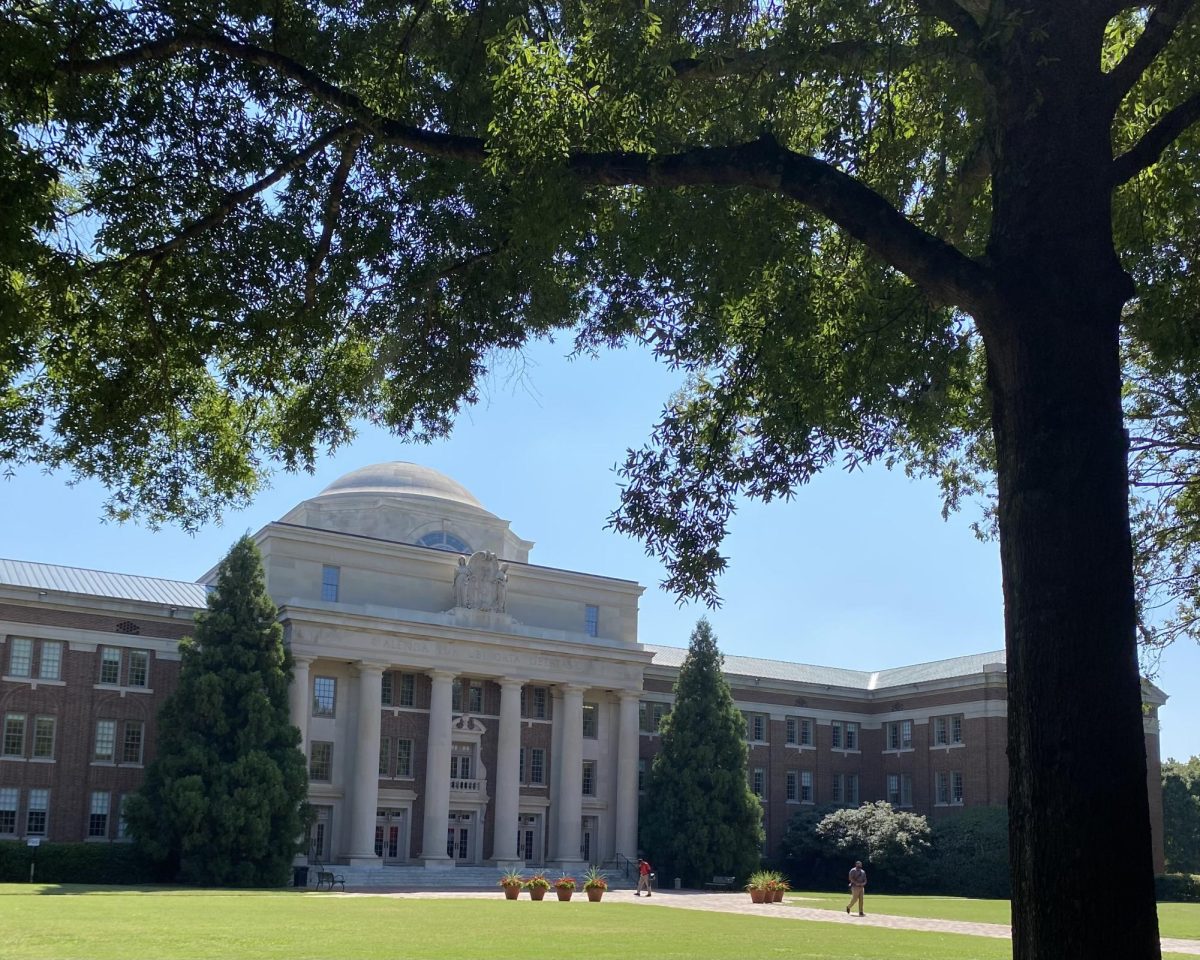
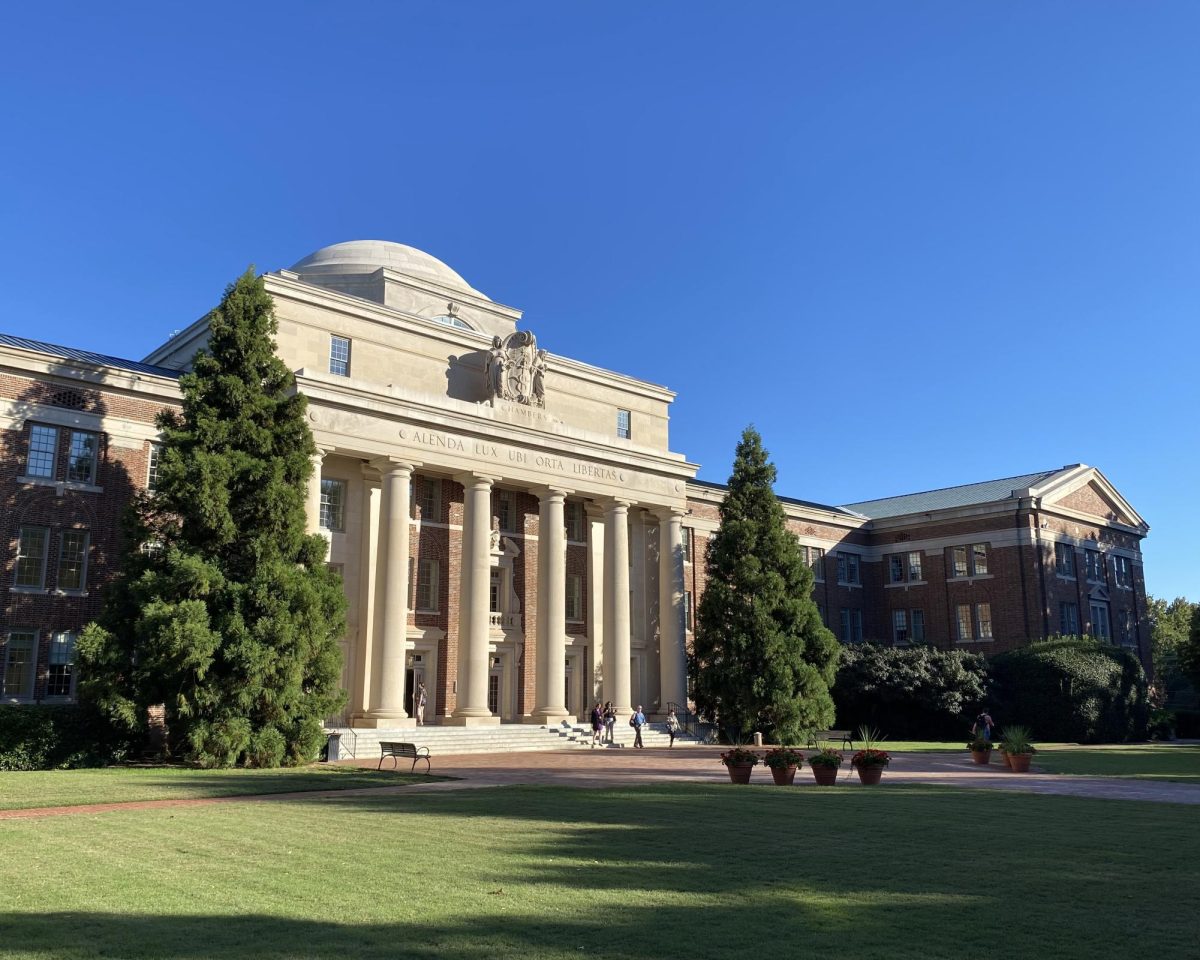




In a town like Davidson that celebrates its mom and pop shops and small town charm, the three desolate storefronts on downtown Main Street stand out like a sore thumb. At face value, the dark empty windows may seem like an inability to bring commerce to Davidson. In reality, they represent a milieu of complicated local politics.
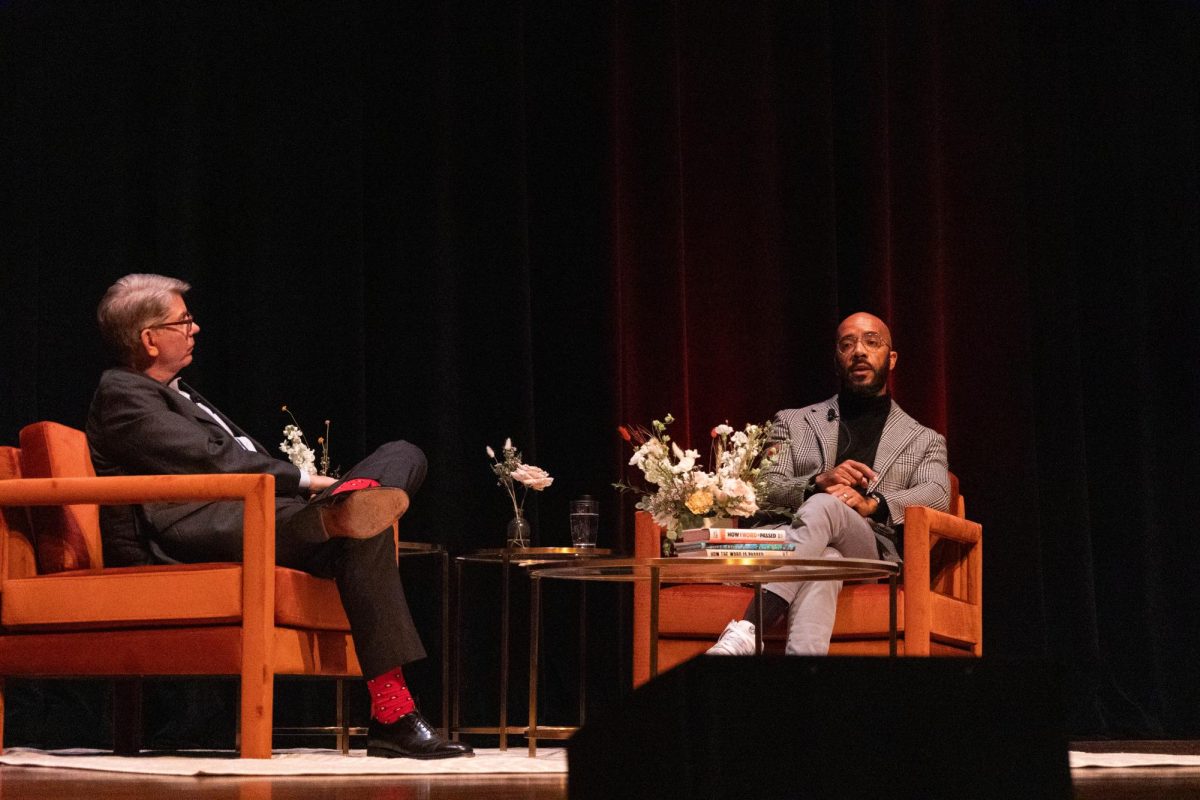
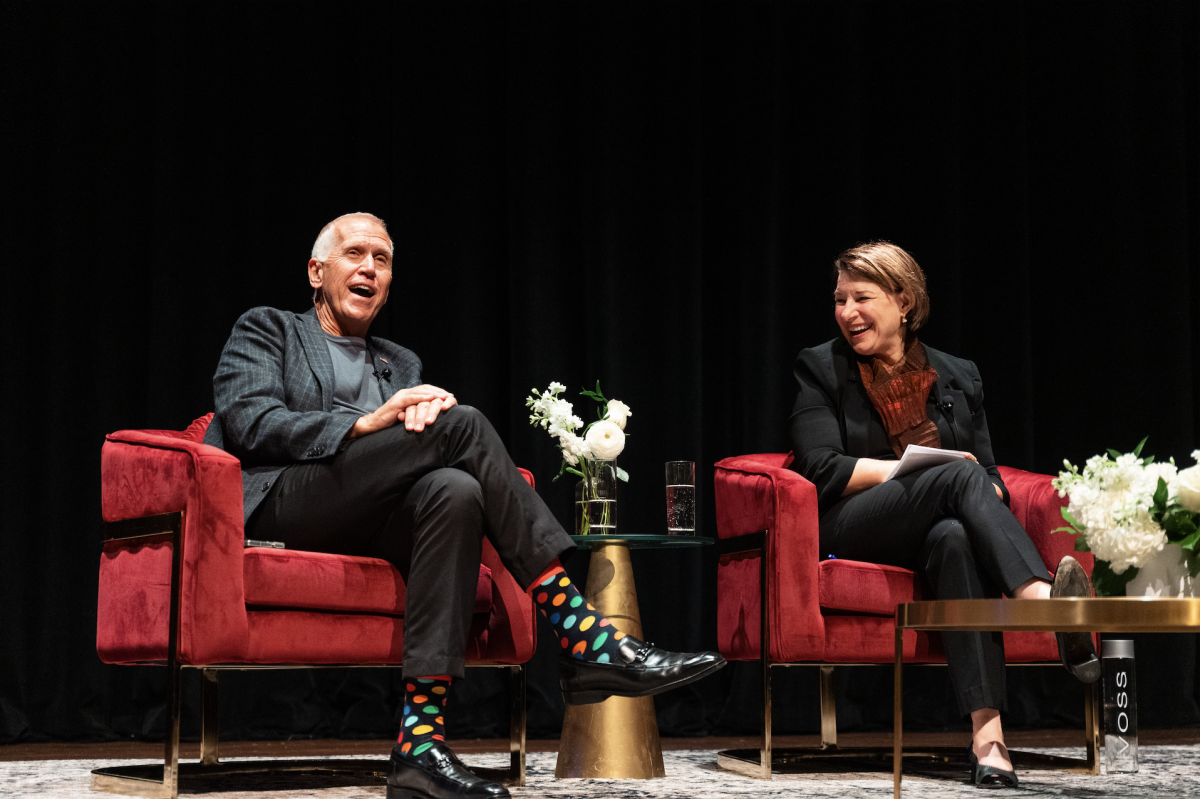
In an effort to shed light on real-world sociopolitics happenings right outside campus, the Young People’s Alliance of Davidson brought four local representatives in the Morcott Room of the Alvarez Student Union on Feb. 19 for a panel and hour of open dialogu, introducing students to some of the faces behind politics in Davidson.
Students sat alongside Mayor Rusty Knox, Town Board members Connie Wessner and Steve Justus ’78 and YPA North Carolina Representative Park Inglefield in a round-table style discussion.
As the four answered questions, participants were able to engage directly with the politicians and gain a deeper understanding of the Town of Davidson’s political intricacies such as athe story behind Main Street’s vacant storefronts.
YPA treasurer Shreyan Kancharla ’29 opened the long discussion about a current hot-topic in Davidson: housing affordability.
Wessner responded first, citing Davidson’s small size for their unique position towards housing affordability. Her experience with the Housing Coalition has shown her the importance of community in enacting change, especially on the local level.
“We have an incredibly strong and experienced nonprofit community and many of the organizations in the community are locally driven,” Wessner said.
Justus echoed Wessner’s view and mentioned the town’s current affordable housing project, a project whose success he attributes to towns “long standing community care for this issue.”
Knox discussed the socio-economic factors, such as gentrification, that drive Davidson’s affordability issues and what his office is going to help negate them.
“We have bought seven or eight houses since I got elected mayor,” Knox said. “We’ve remodeled those and sold them back into the affordable housing program to keep them out of the hands of developers […] But if we can save those houses in those areas that are easy, easiest to gentrify, particularly the fragile west side, that’s so important.”
According to Knox, the town implemented a one cent tax increase dedicated to Affordable Housing in addition to requiring that 12.5% of new housing developments be affordable. “You should be able to live here if you want to,” Knox said.
However, working in small politics also comes with its challenges, especially in North Carolina, which is a Dillon’s Rule State. Dillon’s Rule states that local governments powers only include those granted by the state, according to RaleighForward.
North Carolina banned local government-initiated-down-zoning in 2024, requiring local governments to obtain prior written consent from all affected landowners before adopting any zoning changes. In recent weeks, state lawmakers have started to consider new legislation that would limit local governments’ jurisdiction on property taxes, per WUNCNews.
Tension between state and town authority is frustrating to some officials. “Municipalities don’t have full power over deciding what you can do in your own municipality,” Justus said. “We have to be smart operating in a town like this, to not call attention […] from a state legislature that’s unfair to our agenda.”
The last question asked was in regards to three empty storefronts on downtown Main Street, whose mention elicited scattered laughter from the representatives, as they have been a point of tension for the past 10 years. “What does it trace back to? A bad relationship,” Wessner said.
“Yeah, with my dad,” Knox responded. Knox’s father, Russell B. Knox (or Rusty Sr.), was mayor from 1984 to 1997.
The storefronts are owned by the estate beneficiaries of Tom Clarke ’49, a religious studies professor at Davidson from 1958 to 1985 and world-renowned gnome sculptor, who are looking to change Davidson’s town ordinances in order to carry out their development projects.
“I met with him [the beneficiaries attorney] the first time five or six years ago, and he basically came to town and said, ‘what parts of your ordinance do I need to change to make my plan work?’ And I just didn’t return his phone call, because that’s not how Davidson operates,” Knox said.
There is still a tentative plan, titled the Clark Row Conditional Map Agreement, that, according to the Town of Davidson website, seeks to “redevelop the existing storefront buildings at 121-129 N Main Street in Davidson, NC.”
Their redevelopment plan includes preserving the building’s historic storefronts and building a four-story parking lot addition at the rear of the existing buildings. The plan is still in violation of town ordinances. Implementation would require new amendments and rezoning legislation.
“Because the proposal includes certain provisions that do not meet the Davidson Planning Ordinance (DPO), it must follow the Conditional Map Amendment process (i.e., rezoning) and requires approval by the Davidson Board of Commissioners,” reads the News of Davidson website.
In the same article, Trust architect Chuck Travis argued redeveloping the storefronts is crucial and a “gift” to the town. “Four stories give them a chance to add to the ground floor retail, have a restaurant or commercial on the second floor, with the third floor being more potential for commercial use, and the fourth floor being for residential. This combination of uses meshes perfectly with the town,” Travis said.
“All hell is going to break loose when that plan comes up for public comment because every single person in town is going to have their own view of what should and should not go there,” Wessner said.
As candidates continued to speak, they showed students that they are not only politicians, but community members who are also impacted by the policy they enact. Through answering questions and talking to students, the panelists instilled a deep sense of the importance of local and grassroot politics.
All four officials agreed on the importance of engagement with town representatives in giving meaning to community governance.
“Strengthening local politics first, and making sure that people walk away with a sense that there is meaning in the give and take of politics is […] super critical always, but certainly right now,” Wessner said.
Knox himself emphasized the importance of the panel in humanizing politicians. As mayor, he aims to be as neighborly as possible. “It’s important to have local leadership be identifiable. I am not the mayor, I am Rusty. I am no different from anyone else,” Knox said.
Knox prides himself on being a man of the people, and his path to mayor reflects the care he holds for Davidson citizens. A self-proclaimed “politics hater,” Knox, who is from Davidson, is a realtor by trade and also a touring musician.
He found his way to mayor through his social activism, citing his fights with the town board in 2015 against the Downtown Catalyst Project, and sees his position as one of a community servant. “I had no experience [in politics] other than my mom’s influence, saying that ‘you need to know, local, state, regional, national, international politics, period, you just need to know,’” Knox said.
The mayor also urged attending students to get involved in town politics.
“Sign up for the Town Crier so you get our email, come to the meetings, ask to volunteer. We normally have slots on some of our advisory boards that we hold back to try to get student representation, because it’s important,” Knox said.
Wessner, a 30-year resident, also found her way to politics through her community involvement. Previously, Wessner was the school administrator for the Community School of Davidson and is now the Executive Director for the Davidson Housing Coalition, which she urged students to join.
“The Housing Coalition is always on the lookout for interns […] So get in touch with us if you’re interested, particularly in affordable housing,” Wessner said.
Like Wessner, Justus has been entrenched in Davidson life for many years. Originally from South Carolina, he first came to Davidson as a student, where he also sent his kids. He found his way to local politics through his lifelong passion for global health.
“The perspective I got later in my career of health is actually not that much different than being a town board person, because you have the responsibility for community and their well being,” Justus said.
Ingerfield, though not from Davidson, shared the other panel members’ dedication to local civic engagement. Through her position as YPA representative and her experiences running for positions in her hometown of Hickory, North Carolina, she shared her deep-rooted interest in youth and community in politics.
“I think it’s really important to talk to the youth. And though I am young there’s still things that I don’t get about what you guys are facing,” Ingerfield said.
The roundtable was YPA’s first event of the semester. The club was officially formed last August by President Brianna Harmon ’26, who hopes this event will motivate students to be more politically engaged.
“A lot of young people don’t really know how to engage with politics and the easiest way to do that often is on the local level, and so I think bringing local politicians in to speak with students […] showcases to students that it really is easy to get involved with local politics,” Harmon said.
Nevertheless, the students who did attend felt empowered by the panel members’ testimony. Payten Jenrich ’29, who originally came with little idea of what the event was, walked away with a deeper appreciation for local politics.
“I really enjoyed the aftermath of talking to everyone on the board and everyone involved, afterwards Rusty came up to us and was chatting with us which was really nice,” Jenrich said.
Jenrich was also able to compare what was happening in Davidson to her home town in Colorado. “[Affordable Housing] is a big problem in my town also and throughout the U.S. and the ways that they talked about it were very reflective of how difficult it is when you have private owners of property and a city who is trying to work in conjunction with people who can’t quite afford the properties that are in the city,” Jenrich said.
Park concluded the panel by urging students to get involved in Davidson’s political community. “There are great ways to get involved,” Park emphasized. “And, yeah, it’ll make your resume look good, but also you’re going to learn from so many people and make those relationships and connections. So I would take advantage.”

