







Whether looking for online articles or physical copies, Davidson students are not limited to what is in the college library. Instead, they also have access to an online service called the Interlibrary Loan (ILL) to expand their resources. From a novel in Virginia to a journal on the other side of the country, ILL allows students to request both digital and physical materials from other libraries and receive them with a quick turnaround.
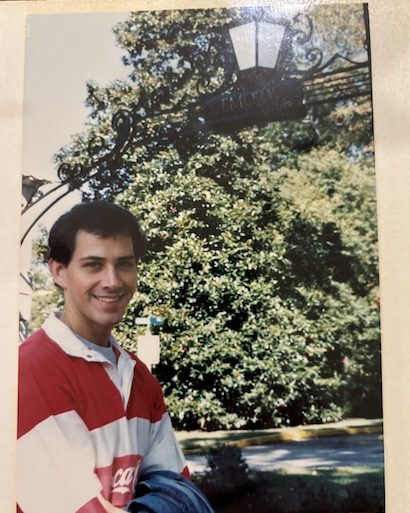
Behind the system is Interlibrary Loan Coordinator Joe Gutekanst who has been running the system for three decades.
Once a request hits the system, Gutekanst sees it almost instantly. First, he checks if students can already access the source through Davidson, as sometimes the item is hidden within a database students do not think to search. Then Gutekanst reaches out to partner libraries around the world.
Digital articles often arrive within hours and sometimes even minutes, through automated networks. Physical books move quickly and most arrive within a few days. What feels like library magic on the student side is, behind the scenes, an efficient fast-cycle of request, sourcing and shipping happening across the world every day that Gutekast guides Davidson through.
Students submit requests through an online form that routes everything to the ILL team. “We
process it there,” Gutekanst said. “We’re looking to supply the item as soon as we can, whether that be from other libraries or sources that Davidson has or elsewhere.”
ILL was created in 1917 by the American Library Association. James Simon, assistant director of collections and discovery at Davidson’s library, said it has since become a foundation of library operations.
“ILL is one of the earliest forms of cooperation that libraries had ever entered into. This goes back to the early 20th century […] libraries always developed agreements where they could share books on request,” Simon said.
Most materials are exchanged at no cost. Davidson also belongs to rapid-lending networks that speed up deliveries. Simon sees this century-old system as the backbone of how Davidson approaches lending today, guiding a culture where sharing resources is not just practical but expected.
Part of Simons’ role is determining what content to buy for Davidson’s library .ILL enhances that process. “We consider ILL to be one tool among many that we use to help provide the resources to the students, faculty and staff ,” Simon said.
When deciding what to acquire for Davidson’s library, Simon’s team splits the request into multiple paths: something Davidson already owns, something it could buy long-term or something best borrowed temporarily. “When we decide to purchase something […] it’s something that will have use beyond just a single use,” Simon said.
ILL use has increased over time. Gutekanst said that in the past month alone, the library handled 1,200 requests, a volume he described as unimaginable when he first started. “When I started, it would be a phenomenal month, a period of time maybe two months worth,” Gutekanst said.
According to Simon, 670 students used ILL last academic year. That is about one third of the student population.
Gutekanst thinks that word of mouth and reliability contribute to ILL’s rise in popularity. “Faculty now do promote it, and I’m so grateful,” Gutekanst said. “Once folks know that they can get what they need in a timely fashion […] they’re more likely to request something.”
For Sophia Cimballa ’26, an English and History double major, ILL has become essential to her upper-level coursework. “I’m writing a history Capstone paper and an English thesis, and so I’m just always sort of finding different books and citations,” Cimballa said.
Cimballa also lauded the system’s efficiency. She said she has not waited longer than a week for an ILL request. “I’ve had a couple of quick email exchanges with [Gutekanst] and he’s definitely helpful in terms of the different articles and things that he finds,” Cimballa said.
Gutekanst sees more change ahead, including a move to more open source systems. He is especially interested in efforts to extend access to communities without reliable systems. “There’s talk of even providing things to some sort of education for refugees,” Gutekanst said.
After thirty years, his enthusiasm has not dimmed. Before returning to steadily flowing requests, he added one final line with a grin. “I’m waiting for your first request.”