




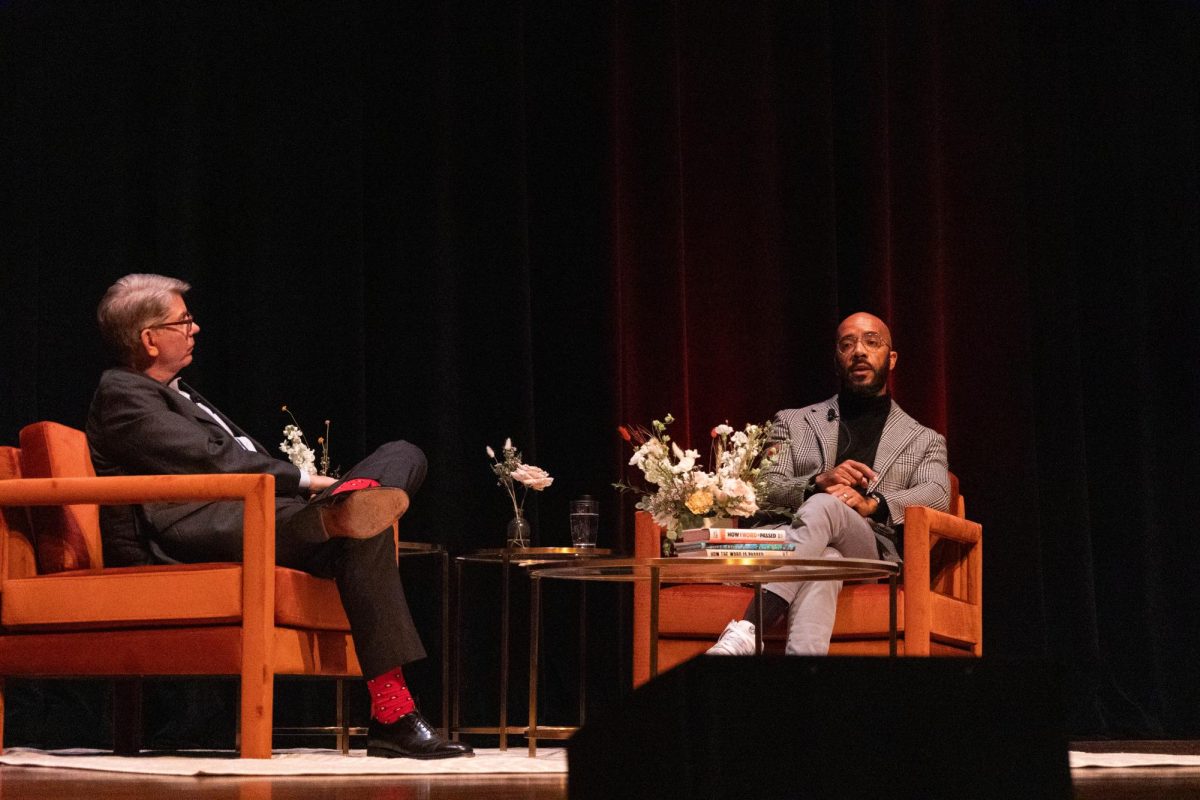
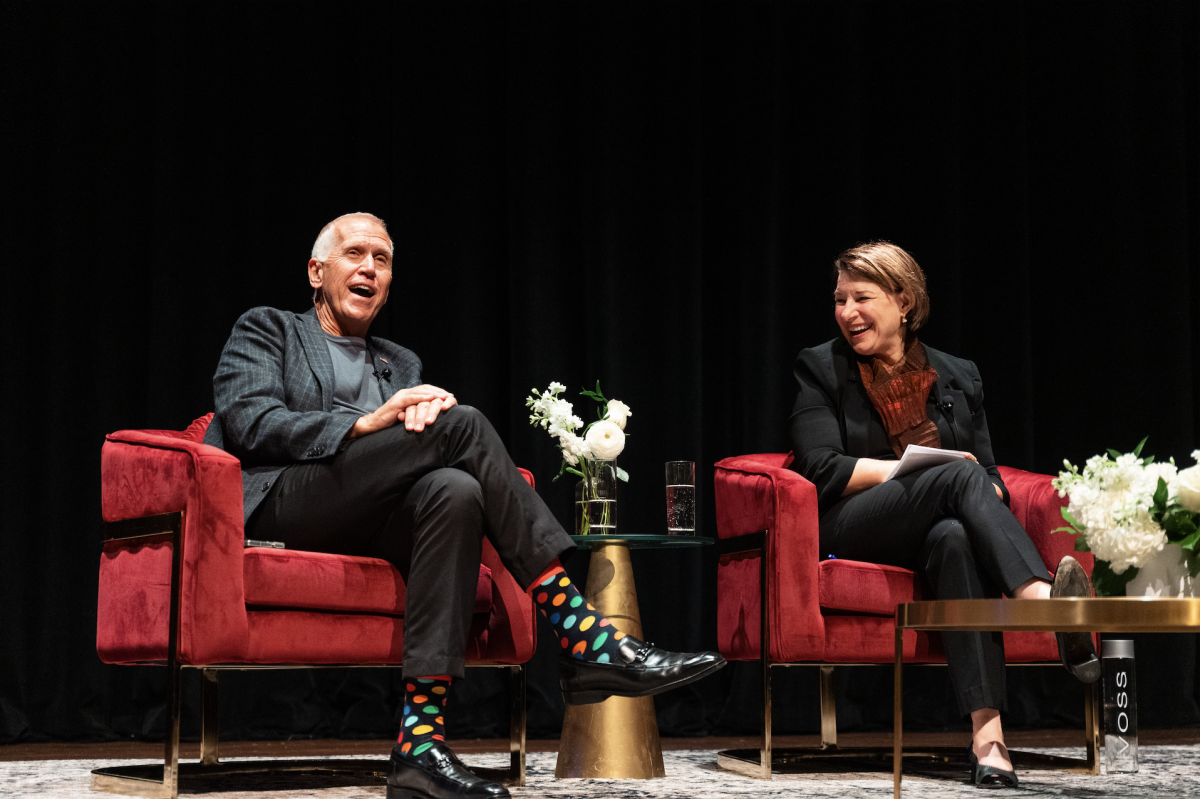


UNC Chapel Hill Professor of Political Science Caitlin Andrews-Lee, a comparative politics scholar specializing in Latin America, visited Davidson Monday Feb. 9, delivering a lecture in Hance Auditorium titled “Charismatic Leaders and Authoritarian Legacies: Venezuela in Comparative Perspective.” The lecture, sponsored by the Dean Rusk International Studies Program, comes just a month after the United States captured President Nicolás Maduro of Venezuela, which Andrews-Lee criticized as illegal and unwarranted.
“This operation was a military endeavor and a violation of international law,” Andrews-Lee said. “I’m going to briefly go over the stated reasons that the United States justified this intervention with and I’m going to show that they don’t really stand to scrutiny.”
As well as explaining why kidnapping Maduro did not address the drugs, migration, and oil interests that the US used to justify the action, Andrews-Lee used Venezuela and Maduro’s predecessor Hugo Chavez as a case study for charismatic legitimacy, a form of political authority rooted in a leader’s personal magnetism.
“Chavez is the quintessential charismatic leader,” she said. “I ran a lot of focus groups and surveys in 2014 and 2015 when I was living in Caracas with followers of Hugo Chavez. I can’t tell you the number of people who started to shed tears when talking about Chavez.”
With Venezuela at the top of the headlines, the timing of Andrews-Lee’s visit to campus was no coincidence. Seeing Maduro’s capture as a matter of global significance, history professor and Dean Rusk Program Director Jane Mangan looked to bring in an expert on the subject to speak at Davidson.
“There was so much going on with the US and Venezuela over break that I started reaching out to people to figure out who we might bring in,” Mangan said. “We wanted somebody who was an expert on Venezuela, and that’s what [Andrews-Lee] has been doing for several years. But I wasn’t sure if we could get her, because I figured everyone who works on Venezuela is being asked to give a talk right now. We felt lucky that we were able to bring her in.”
As well as responding to major world events, Dean Rusk lectures have the goal of “support[ing] the curriculum at Davidson” and “connect[ing] to professors’ areas of teaching or research.” As a result, prior to her evening lecture, Andrews-Lee visited two classes during the day: Comparative Politics and Intro to Latin American Studies.
“She talked a lot about what legitimacy looks like in the state, and how charisma plays into that,” Madeline Kleiner ‘28, a student in Comparative Politics, said. “I thought she was a really good speaker — I was really engaged the whole class period.”
Much like Kleiner’s experience in class, student reactions at the lecture were quite positive.
“Before the professor even spoke, it struck me that this was one of the rare times where I had encountered a young female voice within the realm of political science and academia,” Virginia Barber ‘26 said. “Her knowledge on the topic was very evident as she continued with the lecture. It’s very impressive the amount of energy and time she had clearly spent on this topic and proposing her own ideas around charismatic leaders within Latin America.”