




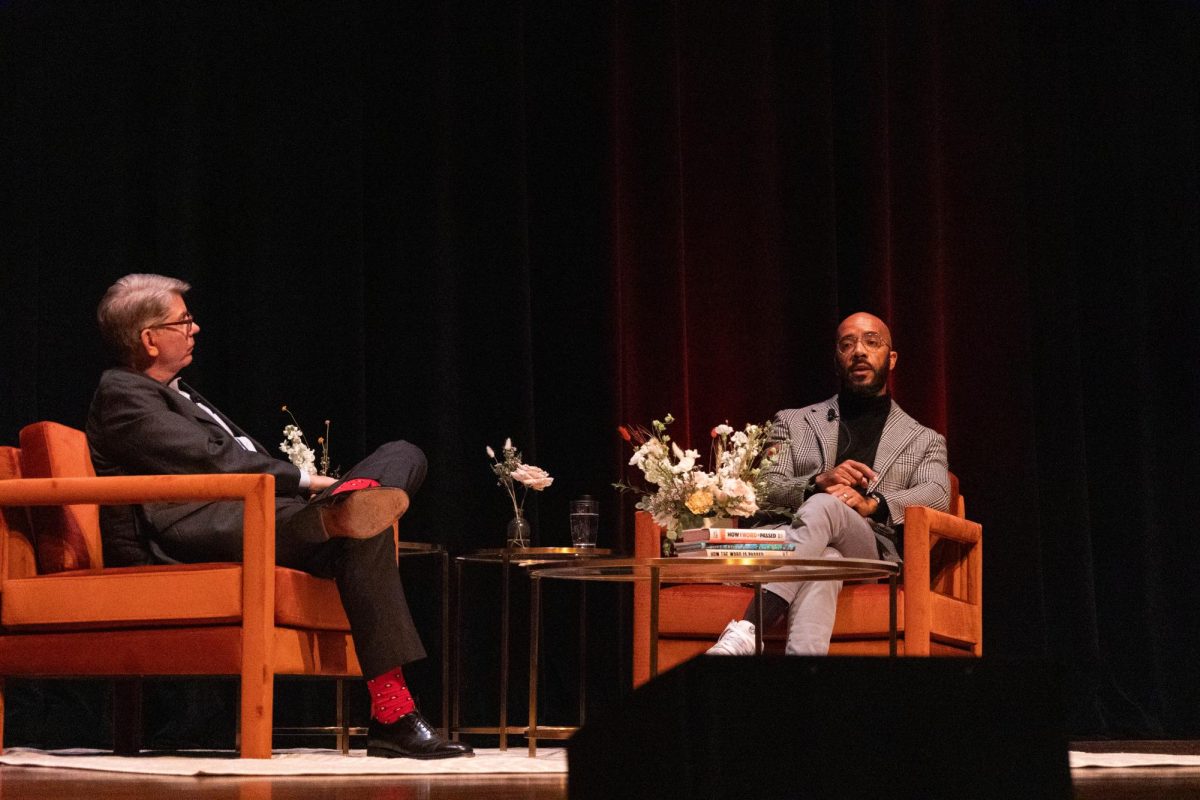
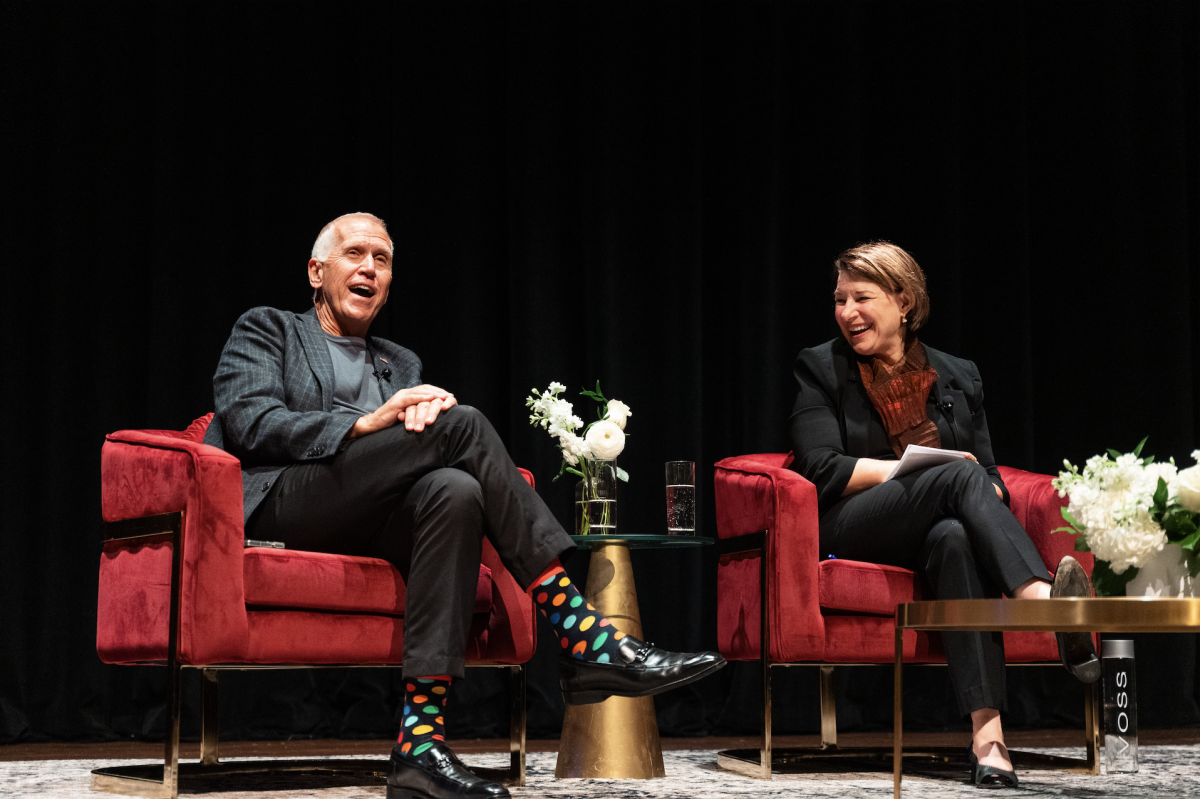


The 2025-26 academic year marks President Doug Hicks’s (’90) first four years in office. Under his tenure, the College has made significant advancements in projects like the “With These Hands” memorial, the Oak Row exhibit and the new library, while also grappling with social unrest on and off campus and intensifying threats to higher education.
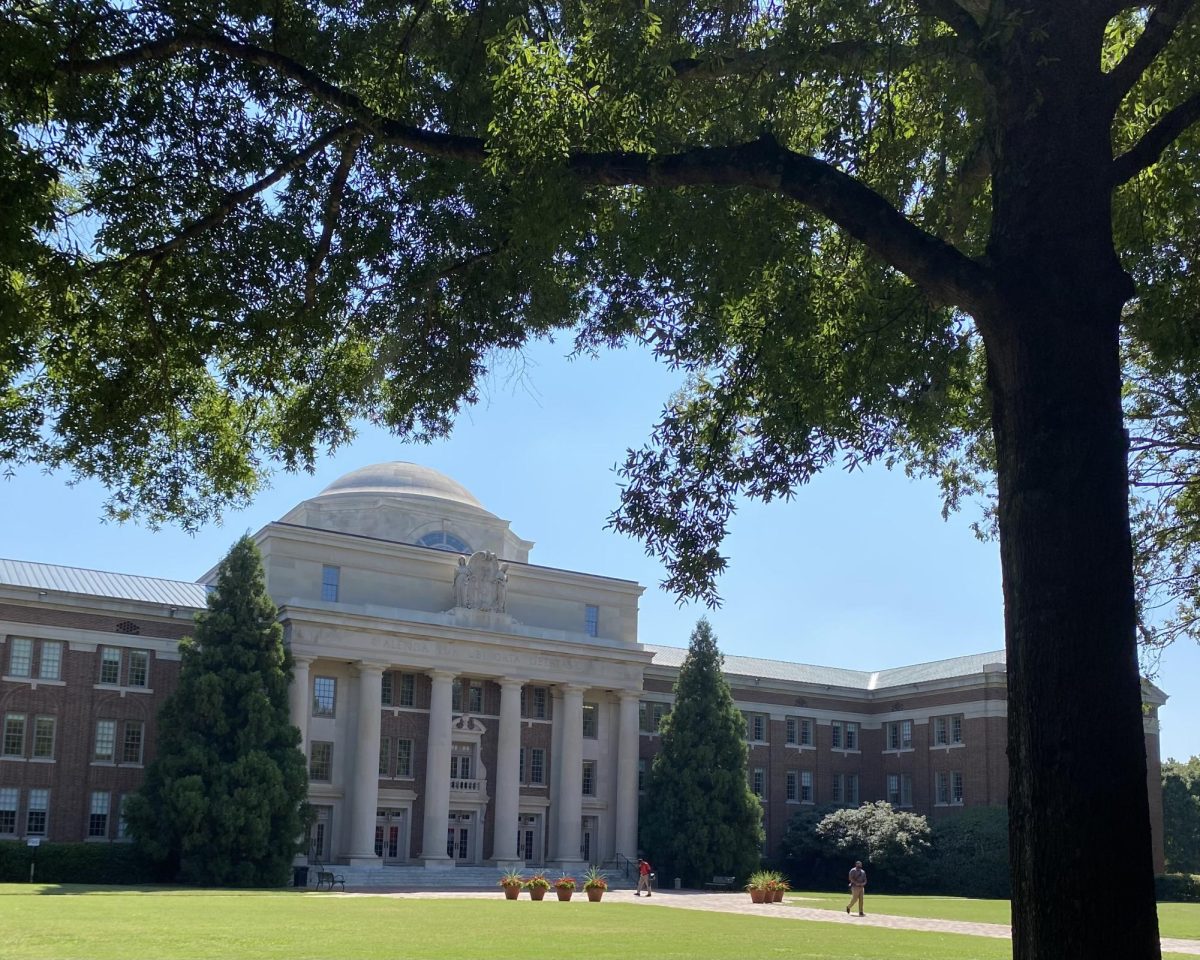
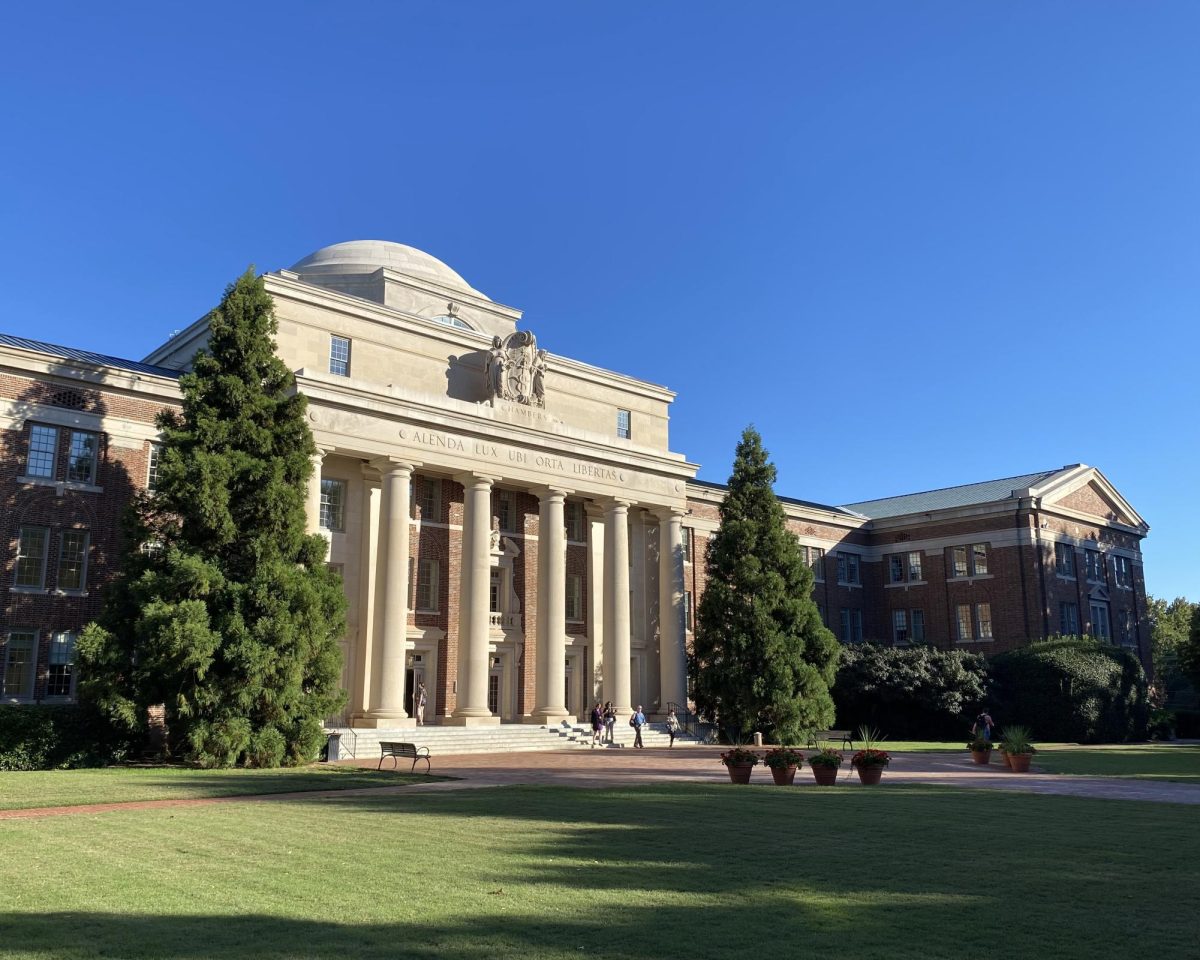
Hicks is a well-known figure on campus. He often stops on his walks across Chambers Lawn to chat with students and is a common sight at athletic events and the occasional Oops Improv Comedy performance. Many students see him as a quirky leader whose face graces the senior classes’ souvenir “Doug mugs.”
“Without fail over the last four years, every time I run into him, it does not matter what kind of day it is, he’ll say hi to me and then be like, ‘How about this weather we’re having’ without fail,” Jaiden Truhe ‘26 said. “It’s kind of like a bit between me and my friends to try and say hi to him to see if he’ll say it.”
There is more to Hicks than his friendly face, as a leader who stepped into the role of president following a global pandemic and entering into a mood of anti-intellectualism at the national level. As his predecessor President Emeritus Carol Quillen put it, the role of a college president is to answer the question:
“What does the world need from a place like Davidson now?”
Quillen served as president from 2011-2022. Shyam Gouri Suresh is the Cannon Professor of Economics and has also worked at Davidson since 2011. He thinks the shift in academic backgrounds from Quillen, a historian, to Hicks, a scholar of economics and religion, fits the context of today.
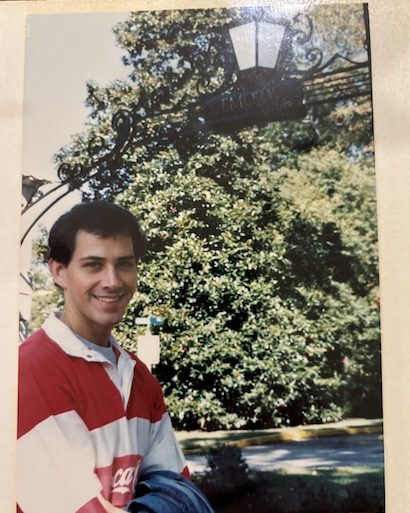
Hicks graduated from Davidson in 1990 with a degree in economics. He went on to get a masters in divinity from Duke, and a masters and PhD in religion at Harvard. He is also an ordained presbyterian minister.
“I think this is the combination that is really able to defend against the attacks that higher ed is facing,” Suresh said.
Public trust in higher education hit record lows in 2023-/24 at 36% and sat at 42% in 2025. The Trump Administration terminated billions of dollars of already-granted awards for colleges and universities, and targeted billions more for additional cuts. Davidson has been relatively protected as a small, Presbyterian private institution. The College even won federal funding for the Civil Discourse Initiative, part of the IPG.
In discussing how he defends higher ed, Hicks said he focuses on the positives.
“I try not to take a defensive posture,” Hicks said. “I try to speak about not what we’re not doing or not what the problems are, but what we are doing.”
This work, Hicks pointed out, includes recent trips to alumni chapters in Boston and New York, expanding the Deliberative Citizenship Initiative and SGA programming. He highlighted a cookout last week with local Black families and descendents of the formerly enslaved and exploited people who built and sustained Davidson as an additional example of the work he and the College are doing to put their best foot forward.
The College also hired a lobbyist for the first time ever in 2025.
While confronting challenges in Washington, Hicks also dealt with on campus tensions. In the first years of his presidency, social unrest on campus was prominent with student protests calling for a ceasefire in Gaza and Palestinian liberation, alongside demands for the school to divest from Oracle, which provides software services to the Israeli government and military. Davidson uses Oracle for payroll and other HR activities. President Hicks’ and the rest of the administration’s primary response to students around this time came largely in the form of emails.
“There could have been more done because they’re physically pretty protected, especially around like the— I remember sophomore and junior year, there were a lot of students, like protesting ICE or free Palestine protests,” Drohan Lord ‘26 said. “I didn’t recognize, I didn’t really see a lot of support from, I didn’t see anything explicitly said by Doug.”
Recently, Hicks has been confronted by an environment where international students fear random deportations and Latinx students are scared to leave their dorms. Border patrol came to Charlotte during the fall semester and at least two international students could not get their visas on time to begin the school year.
In his 2022 inaugural address, Hicks outlined an educational ethos grounded in hope. When asked how that guides his actions in 2026, when many students feel far from such hope, Hicks said he leans on hope as an action.
“Hope is seeing the world exactly as it is and then envisioning a future that’s better and working for it,” Hicks said. “So it’s wholly consistent to name the warts, the challenges, the anxiety, the worries, the fear and to be hopeful about a better future.”
When describing the work being done on campus however, Hicks shifted the discussion from fear of ICE and the challenges international students face to concerns around mutual respect and free expression among conservative students and students of color.
“I will not be satisfied until there’s a high level of comfort or a level of practice of sharing your perspectives among all groups,” Hicks said.
Hicks’ work on inclusion dates back to his time as a student. He was part of an SGA “Solidarity Committee” with the stated goal of making “everyone comfortable at Davidson.” In a Davidsonian article about the committee published in January 1990, Hicks is quoted as saying “The demonstration of racism is subtle. It’s so subtle that a lot of students in the majority don’t recognize it.”
Today, Hicks said the College has moved “very very far” pointing to the Oak Row museum, the establishment of a trustee committee on education and reconciliation and the installment of Reverend Daniel Heath as the director of community descendant outreach.
“We’ve tried to address systemically questions of racial bias or inequality or even racism,” Hicks said. “I think systemically we’ve done quite a good job and we are imperfect. Every human being is imperfect, and every institution is imperfect.”
Quillen has high praise for Hicks’ first years.
“He’s a really thoughtful scholar,” Quillen said. “He loves Davidson, and I think he’s doing an amazing job at leading it at a challenging time.”
Looking to the next four, Hicks said he is excited to see the library open and to watch athletics teams succeed. He is thinking about ways to continue to build trust among the public, expanding the IPG and of course, AI.
“I love my work,” Hicks said. “I feel like I’m the right person at the right time.”