




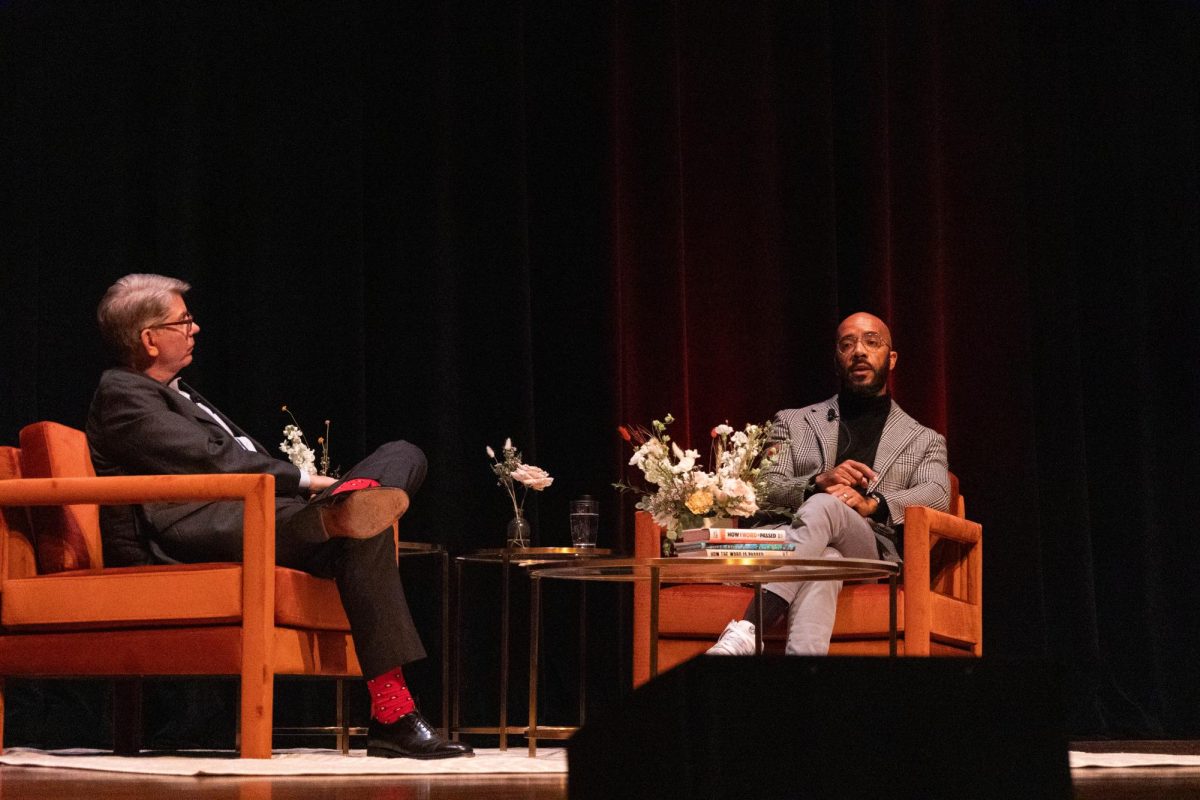
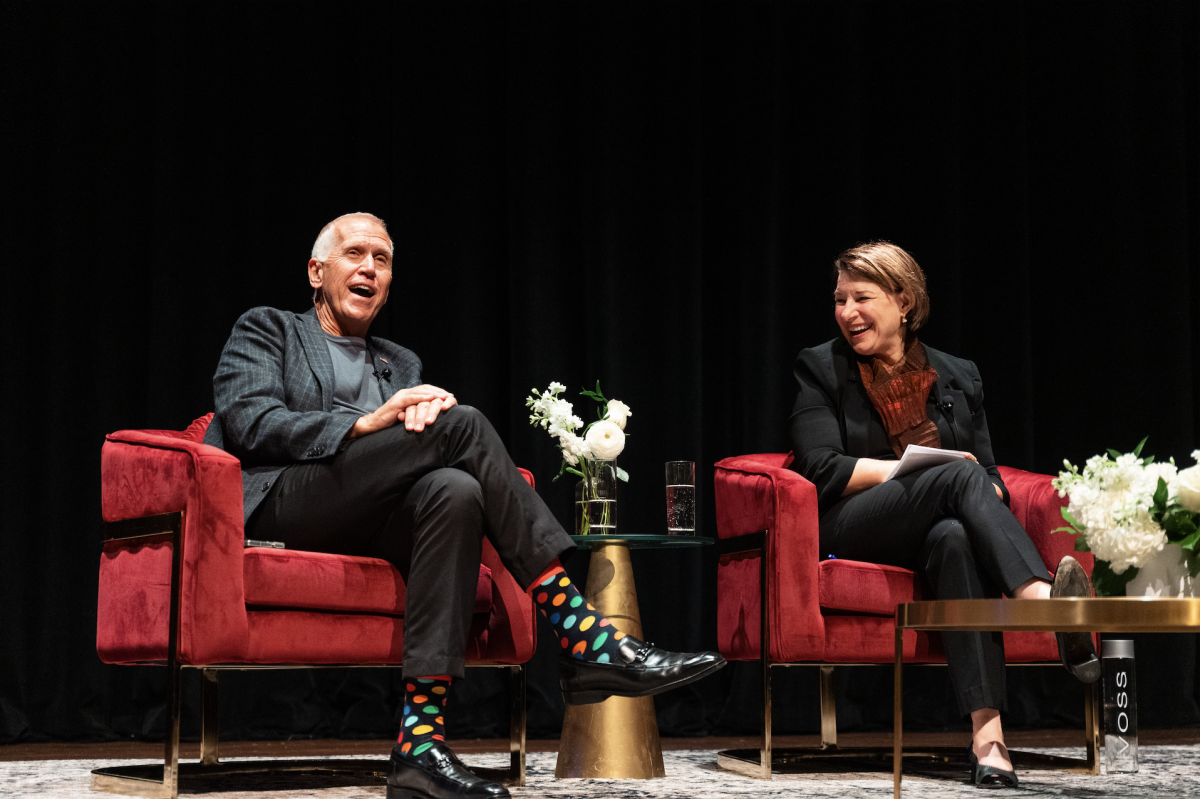


The Dean Rusk International Studies Program, in collaboration with the Pulitzer Center, hosted global health journalist Ridwan Karim Dini-Osman. He delivered the 2026 Spring Pulitzer Lecture titled “Global Health Equity in a Changing Aid Landscape: Lessons from Africa.” As a multiple time Pulitzer Center grantee, seven-time recipient of Ghana’s National Journalism Award and current Nieman fellow at Harvard University, Dini-Osman’s perspective was informed by current events and his previous journalistic work.
Dini-Osman’s lecture focused most intensely on the state of global health equity in the wake of the Trump administration’s decision to dismantle the United States Agency for International Development and cut the U.S. President’s Emergency Plan for AIDS Relief by over half.
Through the close-to-home example of Ghana’s northern regions battle against a meningitis outbreak, Dini-Osman explored the issues disrupting his nation’s healthcare landscape post-aid.
“You had people who couldn’t simply access health care because something as simple as an ambulance wasn’t available. And for those who had access to an ambulance, they had to pay out of pocket to be able to pay for the fuel,” Dini-Osman said. “A lot of the people were not on health insurance, and that meant they were hesitant in reporting their cases to the hospital, because they felt that if you go to the hospital and you don’t have insurance, you don’t have money, and eventually are going to die.”
Dini-Osman leveraged statistics to make his case for global health equity, with a focus on showing the disparity between disease burden and healthcare funding support.
“Data from the World Health Organization shows that [Africa] takes 25% of the global disease burden, but in terms of the support that it receives as a proportion of the global health expenditure, it was less than 1% — so that is what this continent is grappling with,” Dini-Osman explained.
Students took interest in the intersection between public health and journalism, finding takeaways to ruminate on after the lecture. Sophie Rosenbaum ’29 said her perspective on the power of journalism was widened.
“It was interesting to hear Mr. Deni-Osman talk about the meningitis outbreak in Ghana, which I wasn’t very informed on,” Rosenbaum said. “There were real problems in the past that led to vaccine hesitancy with questions unanswered and valid criticisms that were never addressed. So when someone actually showed up and interviewed people […] vaccine rates went up.”
“Being able to see tangibly how journalism can impact an outcome for public health, really expanded my understanding of what journalism is and can give you,” Rosenbaum continued.
Leeya Chaudhuri ‘29 found the lecture educational and informative about the field of journalism.
“Tonight’s lecture was a wonderful way to learn about how Mr. Dini-Osman was able to navigate complex topics and interview people of different backgrounds as a journalist. This lecture taught me that stories are only as good as the people who make it up and to never lose sight of the human element of journalism,” Chaudhuri ’29 wrote in an email to The Davidsonian.
Director of the Dean Rusk International Studies Program Jane Mangan hopes that this lecture, as well as future Pulitzer speakers, can continue to introduce students to exceptional journalists covering a variety of topics.
“My hope would be that students are leaving that lecture with information about another part of the world that they didn’t know before, and that they are interested in asking more questions about that part of the world.” Mangan said. “Moreover, I hope they’re interested in asking some different questions about their experiences, whether it’s curricular or extracurricular, about their life in the US because of something they’ve heard about another place.”
Dini-Osman personally hopes that his lecture can educate students about the broader systems that can make global health equity a possibility. “I just want students to be interested in global health, because it’s at the forefront of a lot of issues, whether you’re talking about the economy or whether you’re talking about like development in general, there is no country that can develop if it doesn’t take the health of its citizens seriously,” Dini-Osman said in an interview with The Davidsonian.
Ultimately, Dini-Osman found Davidson students to be in a good position to contribute toward a reality where global health equity exists.
“I was particularly surprised by the range of interests and particularly amazed by the questions posed by the students. Just being in the class and answering the plethora of questions from the student also gives us hope” Dini-Osman said. “It gives me, in particular, a lot of hope that young people are thinking about some of these issues, and that they are observing what is going on. And that is significant.”