









Following an increase in verbal harassment and reckless riding incidents reported by students and community members, the Town of Davidson and Davidson College Campus Police are stepping up their response to unaccompanied minors riding electric bikes, motorcycles and scooters.
Students often refer to these kids as the “middle school biker gang.” MSBG typically rides around campus in groups of three to seven. According to Campus Police Chief Julian Coaxum, their behavior has “emerged as a noticeable problem in the last three to four years.” As e-bikes have become more popular, riders have become more disruptive.
“We have seen an increase in reports of unaccompanied minors on campus using college facilities, damaging the grounds, riding e-bikes in a reckless manner and, in some instances, harassing members of our campus community,” Coaxum wrote in a College-wide email on March 16.
Watching kids pop wheelies as they bike through campus has become a rite of passage for incoming students. So too has enduring catcalls and slurs; interactions with MSBG have become more frequent and confrontational over the past two years, and students said they have come to expect verbal harassment from riders on campus.
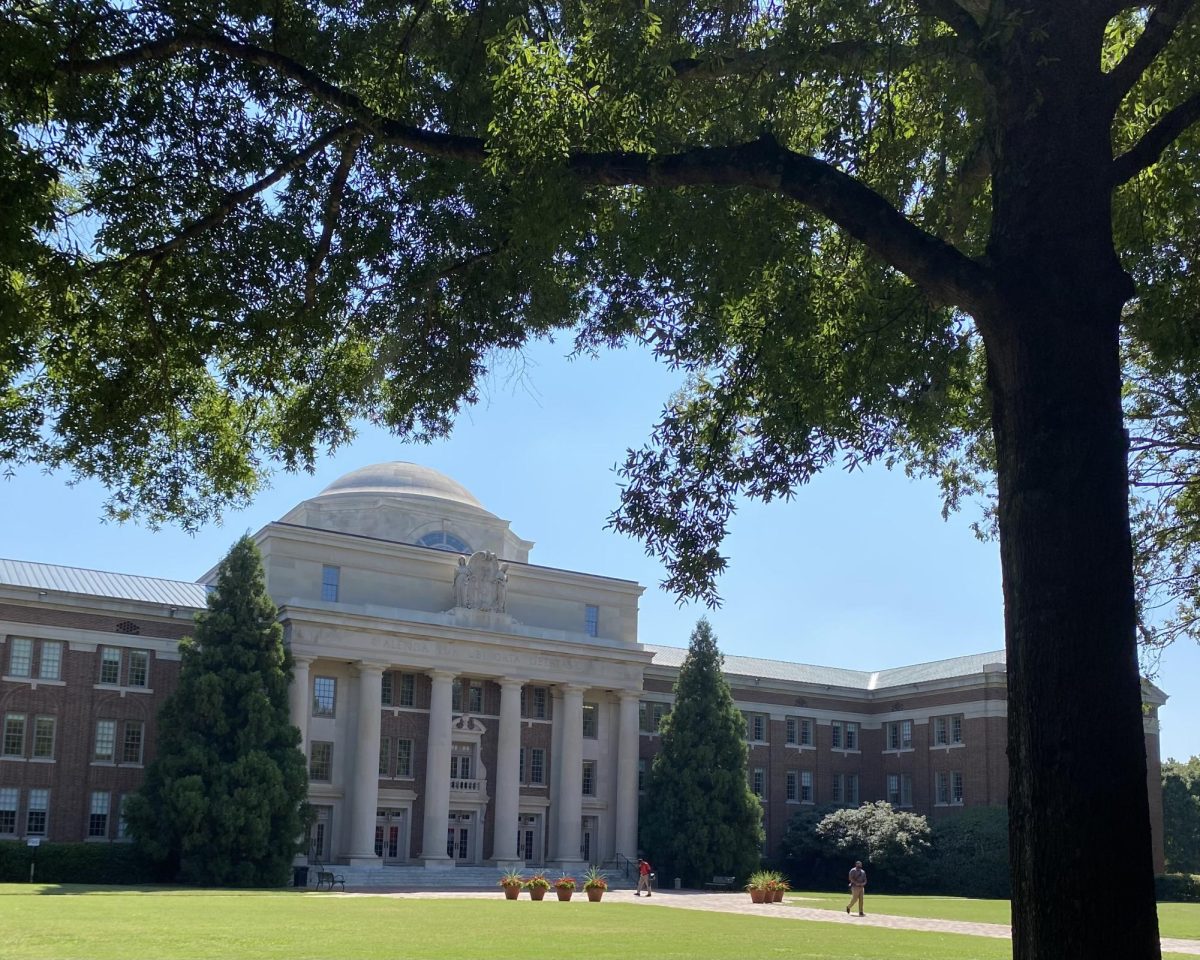
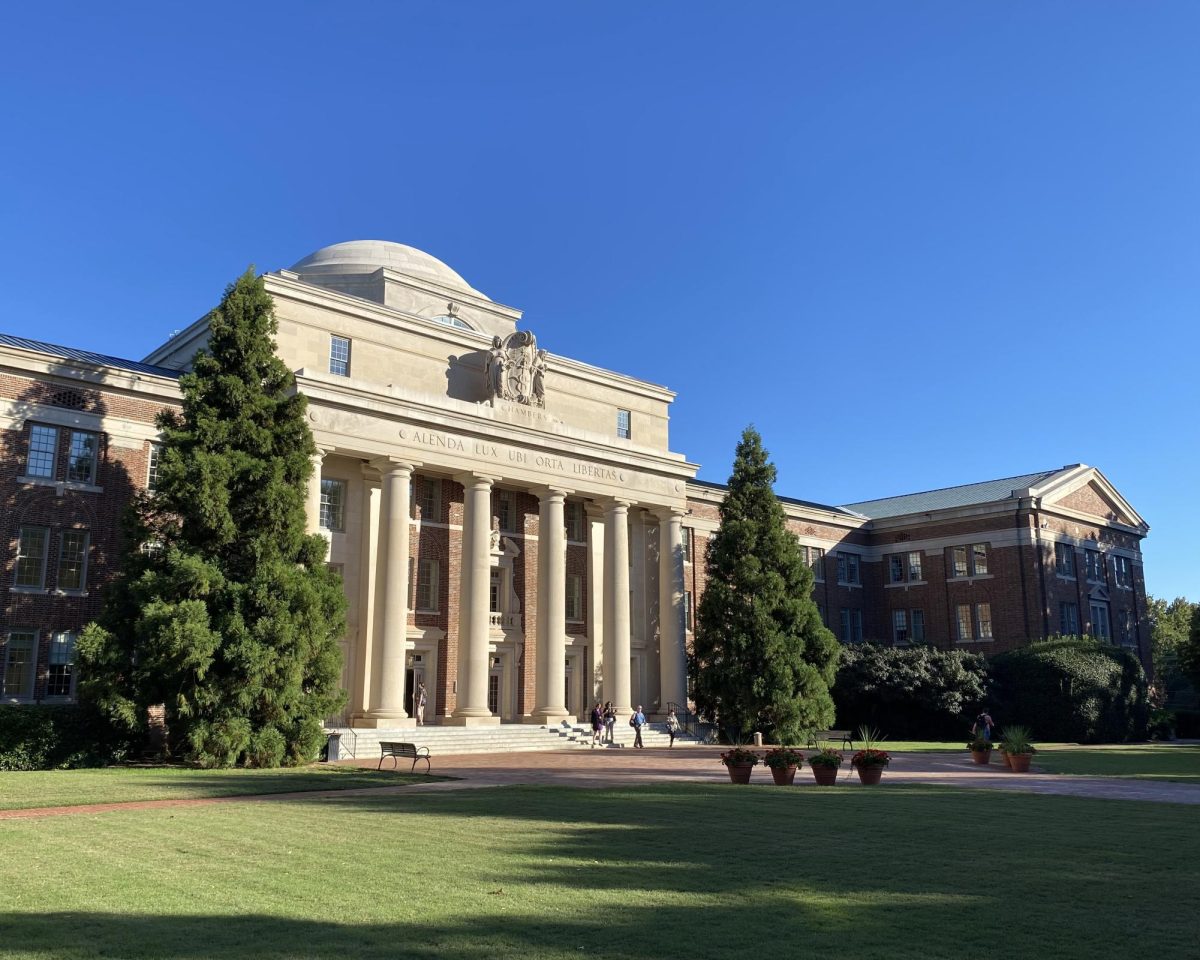
Aditya Phogat ’29 said one rider made racist impersonations directed towards him and his roommate on the first day of international student pre-orientation in August outside Chambers. “It was one of the first experiences I had at Davidson College,” Phogat said.
“I’ve been catcalled by them twice. Once I got the wolf whistle from one of them, and then one time one of these 12 year olds yells ‘nice ass’ at me,” Kathryn Helms ’28 said.
Olivia Hess ’28 recounted multiple instances of disrespectful behavior last semester. One rider called her ‘f— ugly’ after she refused to get on the back of his bike. Another pulled his pants down in front of her friend.
“My friends and I were playing spike ball, and a few of them came up to us, and were like, ‘Hey, yo, where the hoes at around campus,’” Hess said.
Parker Bartlett ’27 is a member of Davidson’s cross country and track and field teams. He interacts with kids on e-bikes almost every day. “It’s just kind of expected [that] you will see a biker on almost every run,” Bartlett said. “It’s not always negative, but it has been.”
Bartlett’s worst encounter happened when he was stopped at a red light about a mile west of Bailey Middle and William Amos Hough High School on a team run when a group of 30 kids rode by and shouted homophobic slurs. The team passes that intersection about once a week. According to Bartlett, they run into kids on e-bikes every time.
Bartlett said neither he nor his teammates take the incidents personally.
“I don’t think anybody really […] gets offended in the moment or lashes out,” Bartlett said. “But you also have to think that you know it doesn’t just happen to us. It does happen to other people, and you do hear about people having interactions that are probably more offensive.”
Jamie Moore, director of grounds maintenance, thinks that e-bikes make it easier to get away with being disrespectful.
“With the e-bike, I think I’m seeing more destruction from that,” Moore said. “I think that also is a segue into how they can treat people on campus. They can make an encounter [with] someone and then zip off. Nobody even knows what direction they are in 10 seconds.”
One of MSBG’s most trafficked spots on campus is the slope between Duke Hall and the library, where a sculpture is anchored on one side by a dirt mound. MSBG uses it as a jump. By this March, grass and mulch had given way to a hardpack trail.
The grounds crew fixed the landscaping and tried to stop people from riding over the mound.
“We’re like, ‘we need to fix this,’ because it kind of looks bad,” Moore said. “We went and picked up some large stones that were on the back side of Vail [Commons] that we brought up during Covid […] We kind of blocked that off and then once we did that, we went ahead and mulched it and seeded [it] and everything like we would do in the spring anyway.”
The obstruction seems to be working. “We haven’t seen any traffic through there,” Moore said.
Material costs to repair damage have been marginal so far; Moore said the slope outside Duke needed to be reseeded, fertilized and mulched anyways. He calculates the real cost in terms of labor and lost time.
“The big thing for me is that labor is being spent there and not somewhere else,” Moore said. “I can’t really put a cost on that, because that labor […] is more valuable somewhere else and not going back behind on kids that think it’s a jump.”
Moore and his team keep an eye out for MSBG and follow them from a distance. “We’re just to kind of monitor, take pictures, let campus police do their thing, and then we can follow them through,” Moore said. “We do want them to know that they are noticed.”
In response to reports of reckless riding, property destruction and verbal harassment, Campus Police will more strictly enforce College policy requiring parental supervision for minors not affiliated with the College. If Campus Police encounters kids on campus, they will be advised of College policy and directed to leave. “If the situation merits, their parents are contacted and asked to come pick up their child,” Coaxum explained in an email to The Davidsonian.
Davidson hired additional contract security personnel to enforce the policy. “These unarmed security personnel will assist our officers in keeping a lookout for unescorted minors and, if needed, will request an officer to stop and speak with those individuals,” Coaxum wrote.
The communication from Campus Police followed a Town of Davidson ordinance passed Feb. 27 strengthening penalties for improper e-bike use, especially for motorized bikes that can reach speeds of 30 miles per hour or more.
Officers can impound bikes violating the ordinance and issue fines of up to $500 for repeat violators. According to Philip Geiger, the Town of Davidson chief of police, the policy is a response to growing community complaints about e-bikes over the past 18 months. The police also noticed the behavior.
“We were seeing riders with no helmets. We were seeing riders doing wheelies through traffic. We were seeing people weave in and out of traffic, traversing sidewalks, then roadways, then back to the sidewalk, because they didn’t want to wait for a light,” Geiger said.
Geiger noted the need to strike a balance between allowing kids to get outside and bike with their friends while cracking down on reckless riding and verbal harassment. He said the ordinance allows officers to address harmful behaviors while holding parents accountable.
“It should not be the police’s job to parent children,” Geiger said.
Moore expressed a similar sentiment. “If they’re not tearing up anything, and they’re not bothering anybody, I was a kid once, you know, I kind of let it go,” Moore said. “But now it’s getting to be a little bit more malicious and just downright disrespectful to our community and our property, and now I don’t have a tolerance for any of it.”
The Town ordinance was created to crack down on reckless riding. On campus, verbal harassment is the main concern. Some worry the College’s decision to escort kids off campus emphasizes the wrong things.
Helms thinks it is normal and even desirable for middle schoolers to ride their bikes around campus—as long as they are respectful. She takes issue with MSBG’s comments towards women, not their presence.
“The only lesson that the kids would take away from it is, man, these cops suck. […] Instead of actually learning something valuable about how we’re not going to tolerate [people] talking to the girls on our campus like this,” Helms continued.
Reckless e-bike use is not exclusive to Davidson; neighboring Cornelius and Huntersville are dealing with similar challenges. Inadequate federal oversight coupled with a surge in e-bike popularity has created safety concerns nationwide.
Geiger has discussed e-bike regulatory reform with state legislators. Davidson’s approach, which works within current statutes, has the potential to set the standard statewide.
“I do think our ordinance serves as a really good model, because I think it is rather common sense,” Geiger said. “It’s 2026, and there’s different things out there, and we need to kind of catch up.”