


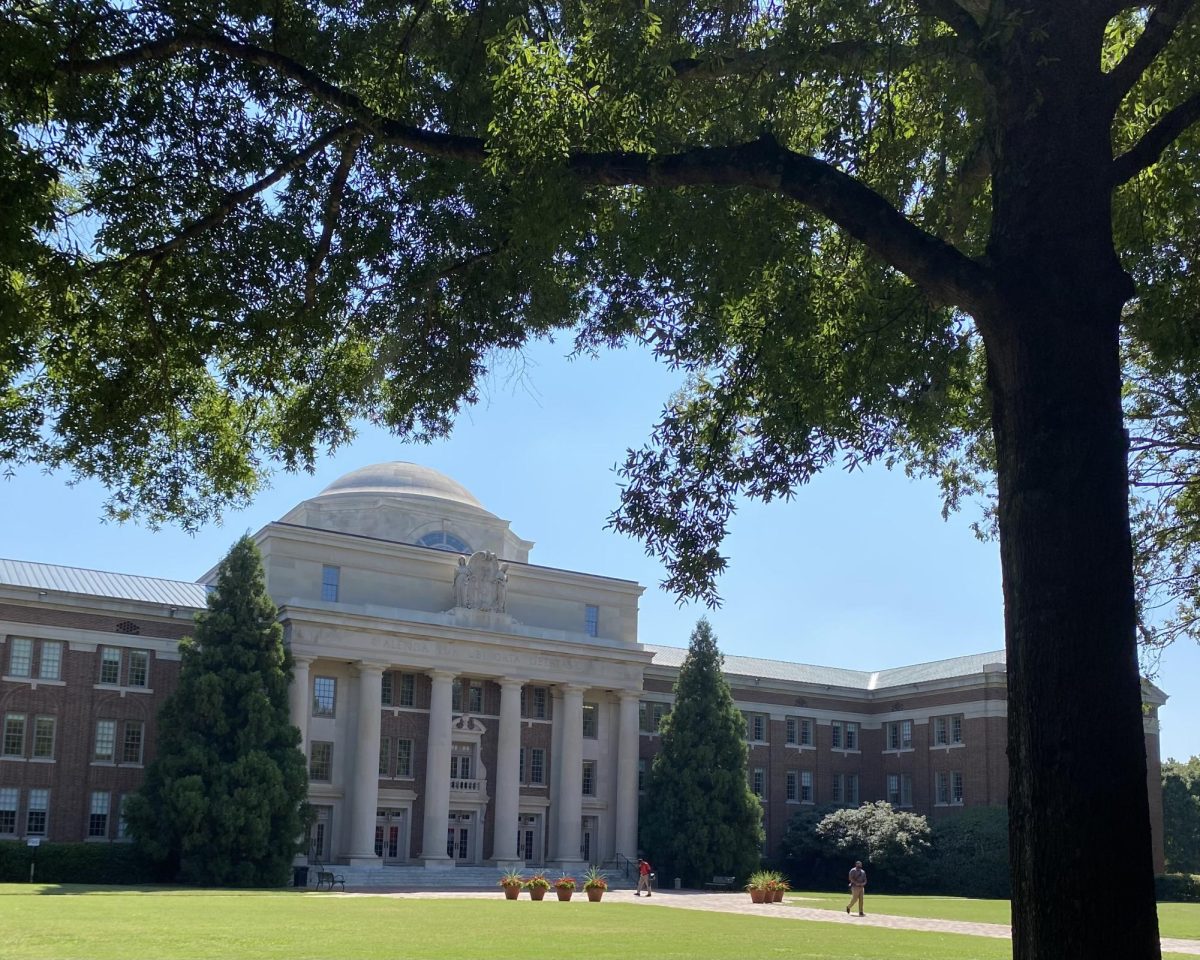
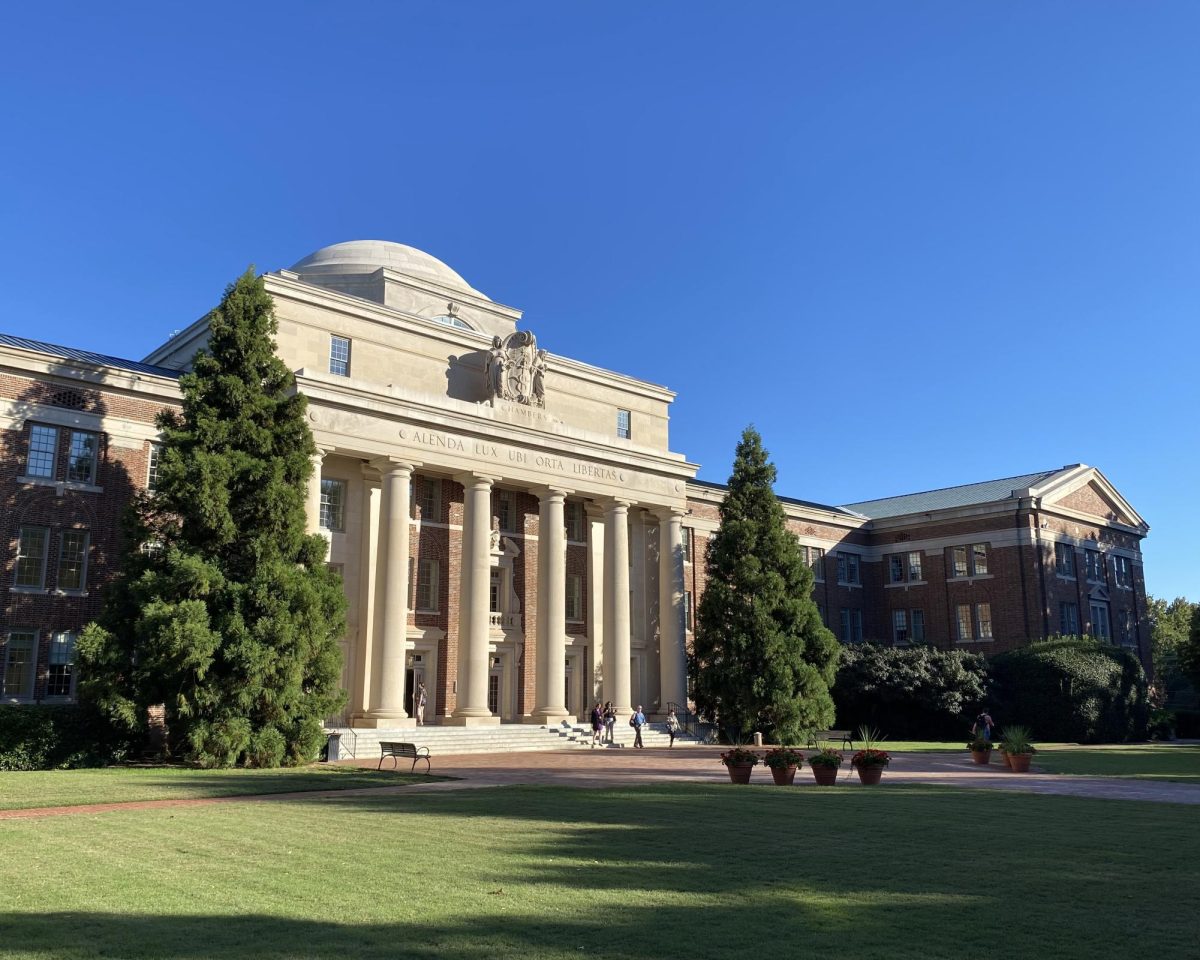




Davidson College raised $47 million to expand the Institute for Public Good. The funding builds on the five core program areas and supports renovations of Elm Row, Phi and Eu Halls and a new plaza between the two halls.
At least 17 individual gifts make up the multi-million dollar package, each coming from alumni and/or parents of current and former students. With the donations comes a name change: The D.G. and Harriet Wall Martin Institute for Public Good after Harriet Wall Martin and the late D.G. Martin ’62.
Davidson President Doug Hicks ’90 publicly announced the funding on Thursday morning in an email to the college community. A formal announcement will also be made in person at 11 a.m. in Union.
Davidson launched the institute in August 2025, and has been actively fundraising for the renovations and program donations over the past year. Donors include familiar names such as Jay Hurt ’88 for whom the Hurt Hub is named and Samara and Anthony Foxx ’93, chair of the Board of Trustees.
According to Brad Martin, the associate vice president for development, the $47 million collection of gifts “ranks among the most assembled in support of programming at one time.”
The institute, as defined by the College, “integrates academic research, civic engagement, public policy, creative expression, and ethical leadership, with the goal of fostering academic and intellectual collaboration that equips students to address society’s challenges and emerge as ethical public leaders.” The institute essentially functions as an umbrella organization for several existing programs, like the Center for Civic Engagement and the Deliberative Citizenship Initiative, and an avenue to create new ones.
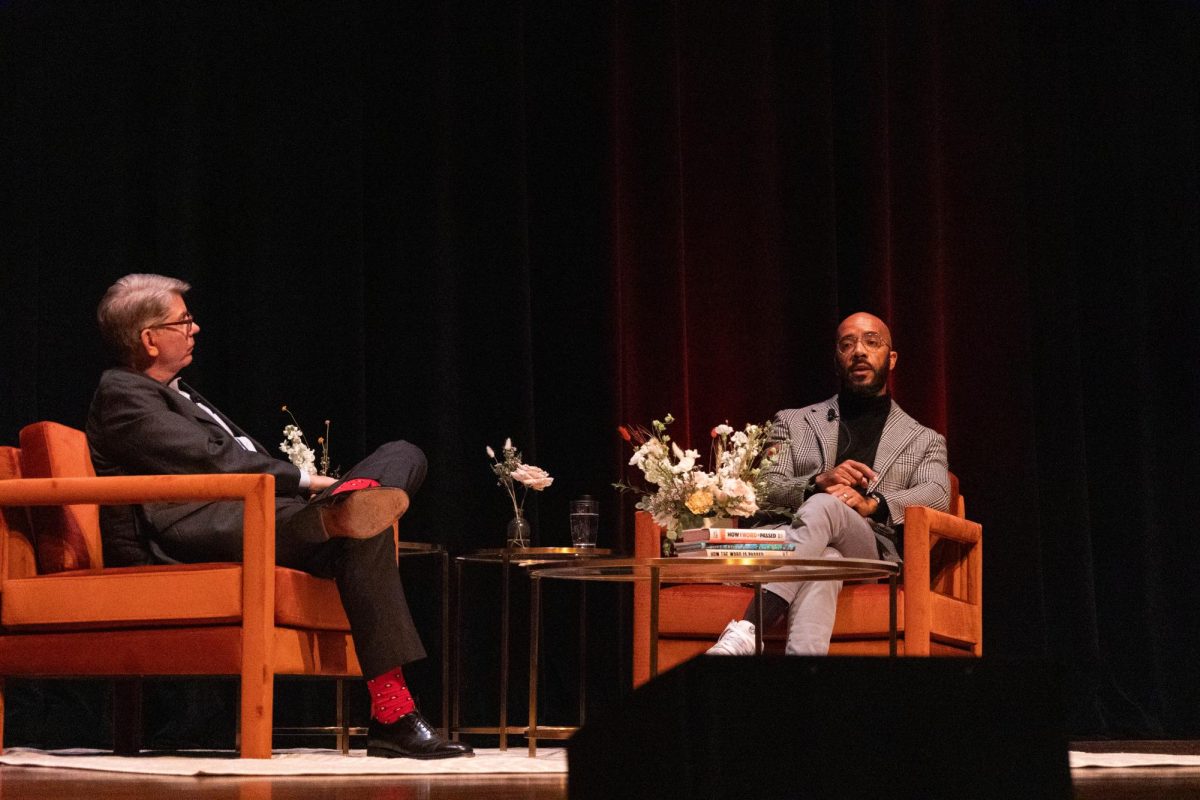
“We have great examples of things that have happened at Davidson,” Director Chris Marsicano ’10 said. “This is about amplifying that. Making them bigger, stronger, optimizing them, making it so that more students can be involved.”
The institute previously relied on a mix of College funding, including endowment support, grants and backing from the President’s Office. With these new gifts, it will no longer depend as heavily on pre-existing College funds to pay for programming and staff. Because many of the donations are endowed, the funds will be invested to generate annual returns, creating a stable, long-term revenue stream to support the institute’s work.
The institute’s primary goal, according to the College, is to train students to be ethical citizens and leaders who can “solve society’s big problems.” While leadership has identified housing, artificial intelligence, governance, civil society and tariffs as potential areas of focus, specific problems for students to solve have not been named. This choice, Marsicano said, is intentional.
“We want to be able to be responsive to the biggest issues that we see,” Marsicano said.
The institute relies on its five program areas—Arts and Public Life, Civic Engagement, Deliberation and Free Expression, Ethics, Honor and Leadership, and Public Policy and Research— to do just that.
“The five programs are the five program areas for a reason,” Marsicano said. “Together they are more than the sum of their parts, to envision brand new, brighter day strategies for the future.”
All five programs are now endowed, meaning the funding is set aside permanently, and the income it generates helps pay for the programs over time. The money will support existing opportunities and build out new initiatives. The program on ethics, honor and leadership, for example, received sustained funding for annual honor council conferences. Davidson faculty will also be appointed to direct the arts, public policy and free expression programs.
The institute also offers funding for individual faculty. It has provided five sabbatical fellowships and 24 curricular and other grants since August 2025. Marsicano said the institute is intended to support faculty innovation, not to replace or compete with them.
“It is providing faculty with support and funding when those faculty want to do something big and new with their courses,” Marsicano said. “There is no universe in which the institute is creating majors or creating courses.”
The gifts do, however, include funding for a visiting fellows program, which will recruit scholars to teach a course. Fellows will also mentor students and offer lectures.
“The vision is to have the biggest Marxist sociology professor and the biggest libertarian economists in the same room with the same students for a year, ideating and coming up with policy solutions to the housing crisis, for example,” Marsicano said.
All of the development and new programming is years in the works. In the next year, Marsicano said he hopes to break ground on the historic quad renovations and continue to raise funds for the visiting fellows. The five year vision is more robust, including a fully funded fellowship program, a completed transformation of the quad, annual honor council conferences and lectures from leading policymakers.
In terms of measuring success alongside that timeline, elevating Davidson’s national platform is a critical metric. The institute will work to put students in touch with national media, support faculty research presentations around the country and get them “in the room where decisions are happening.”
“The dream,” Marsicano said, “is to be able to point to major social policy or cultural change that had its roots to be within the Martin Institute.”
This is a developing story. Check back for updated coverage.