






Though the pressures American athletes face when committing to Davidson are well understood, we hear little about the recruitment process for Davidson’s international athletes who hail from over 50 countries and help hoist Davidson teams to victory. From Bolivia to Hungary to Australia, Davidson’s international student-athletes quietly go through intense recruitment processes of their own, often through agencies and with gap years.
According to several student athletes, the most prominent difference between American and international sports recruitment is that international athletes rarely see their coaches and potential schools in person.
“There’s a lot more exposure to coaches for American kids,” said Sebastian Carpio Moran ’26, a senior from Peru on the tennis team.
Aspiring college athletes in the U.S. travel to endless showcases while coaches rarely get a chance to see international students play in person. Instead, non-U.S. students often rely solely on carefully crafted highlight reels, while Americans usually have the opportunity to play live for coaches on top of a highlight reel.
Even so, this is not always the situation. In the case of Spanish freshman Ian Platteeuw ’29, former Head Coach Bob McKillop traveled to see the U-18 EuroBasket MVP’s basketball game during the summer of 2024.
“Coach McKillop saw me two summers ago in Finland. I was playing with the national team under 18 and he was there. He saw that I was the youngest one there, one year below everyone else. He got interested in me and […] throughout the last season we kept talking,” Platteeuw explained.
However, Platteeuw is in the minority. Many student athletes from abroad rely on videos and Zoom calls in hopes of committing to an American college.
Seemingly, the most universal aspect of international scholar-athlete recruitment is hiring a talent agency. Two international students on the men’s tennis team, Goyo Hidalgo ’28, from Madrid, Spain, and Carpio Moran used the University Sports Program, an organization that finds athletic scholarships in the U.S. and connects athletes with coaches.
These agencies help students create highlight reels, email coaches and contact schools abroad.
Field Hockey member Lourdes Wold ’29 said the process can be expensive. “I was kind of throwing out money but now I have a good scholarship […] so it kind of worked out,” Lourdes said.
Some athletes from abroad have the opportunity to travel to the U.S. for tournaments and showcases. Carpio Moran played in a tournament at the University of Maryland before committing to Davidson in December 2021. Wolf’s first time in the U.S. was when she landed in Charlotte in summer 2025 for pre-season training.
International recruiting is more variable than domestic recruiting. Wolf explained that some of her teammates visited campus, while another committed two months before the season.
“I never visited Davidson before I committed,” Wolf said. “It’s very different for everyone.”
Coming from competitive sports programs in their home countries, international athletes are often struck by how sports are treated at American colleges. Platteuw in particular noted the athletic change. “Here, it’s a way more physical, intense game. You have to be ready to defend and get hit a lot,” he said.
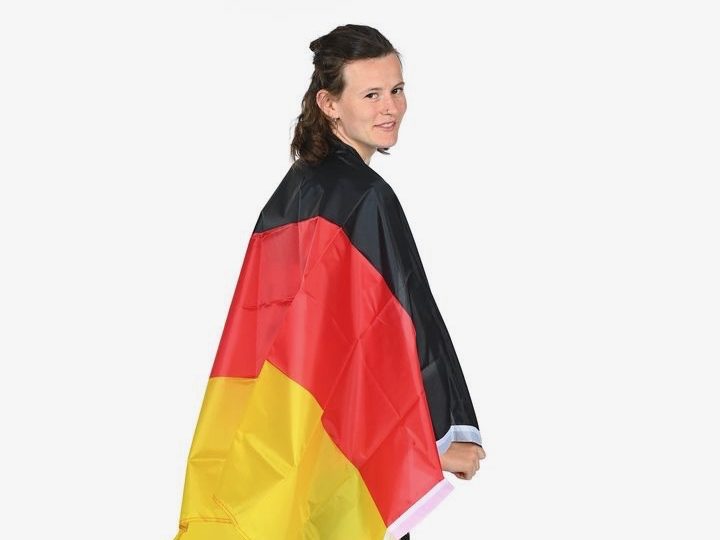
Wolf found herself surprised at how sports are so embedded into academic and social life at Davidson. “In Germany sports are very separate from academics,” she said. “The professionalism around the sport is higher here. In Germany, all I got was a uniform!”
While the process of committing to Davidson as a non-U.S. student is complicated, the real challenges and excitements start upon arriving in the U.S. From language barriers to food aversions to time differences—not to mention first year hurdles like navigating friendships and laundry—international athletes undergo an extra layer of adjustment.
“It took me the first three weeks to adjust to the heat and […] the different words,” Wolf said. “I didn’t know the word for ‘step-left’ for example. There were new words thrown around on the field […] and I was scared to say something wrong or sound weird.”
Platteeuw mentioned a similar experience. “It’s a whole change being here on my own, especially with the time difference with people back home.”
Despite the adjustment, many international student-athletes have good things to say after getting used to college life.
“I would say I made friends easily,” Carpio Moran said. “That’s the great thing about Davidson: I don’t see international students and Americans. I just see friends.”