


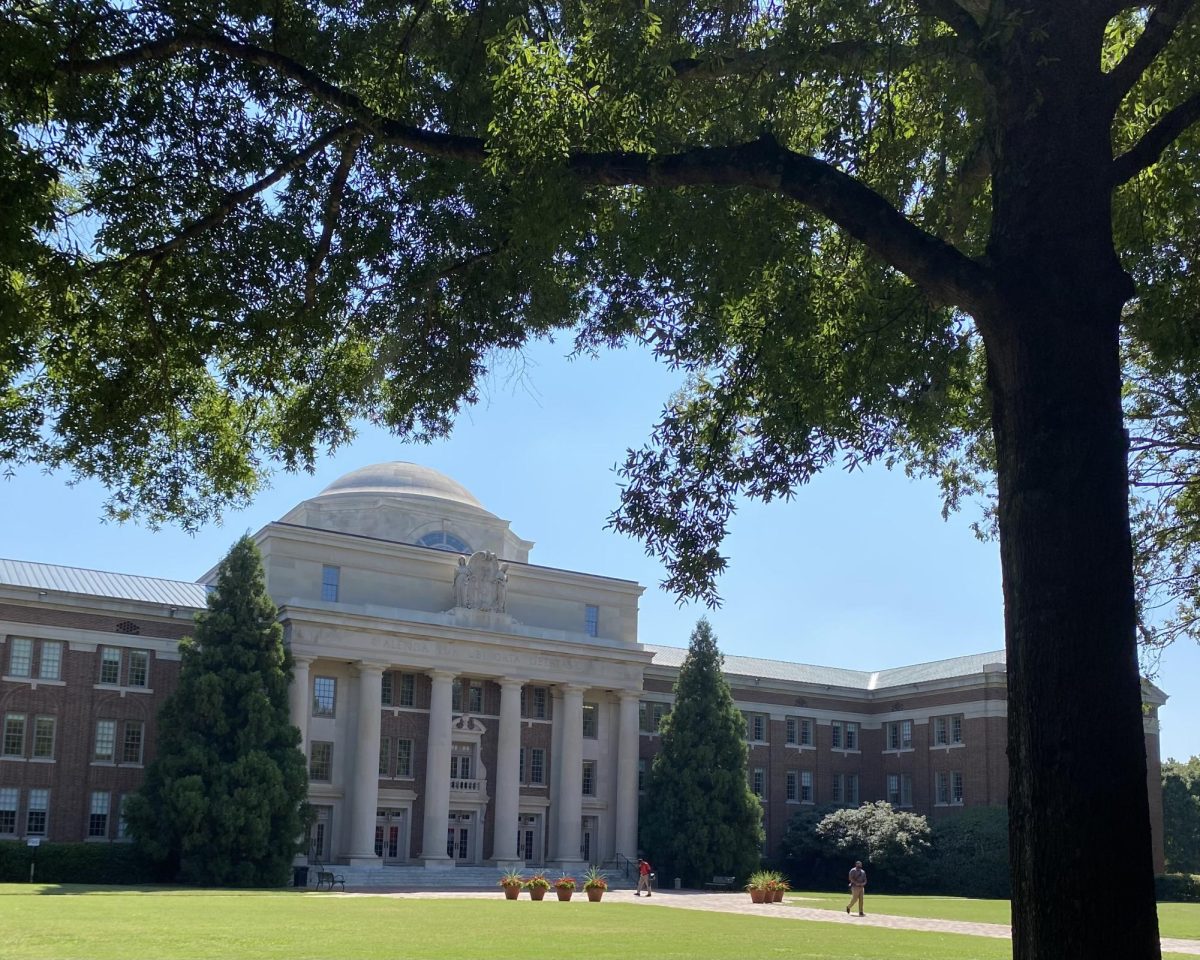
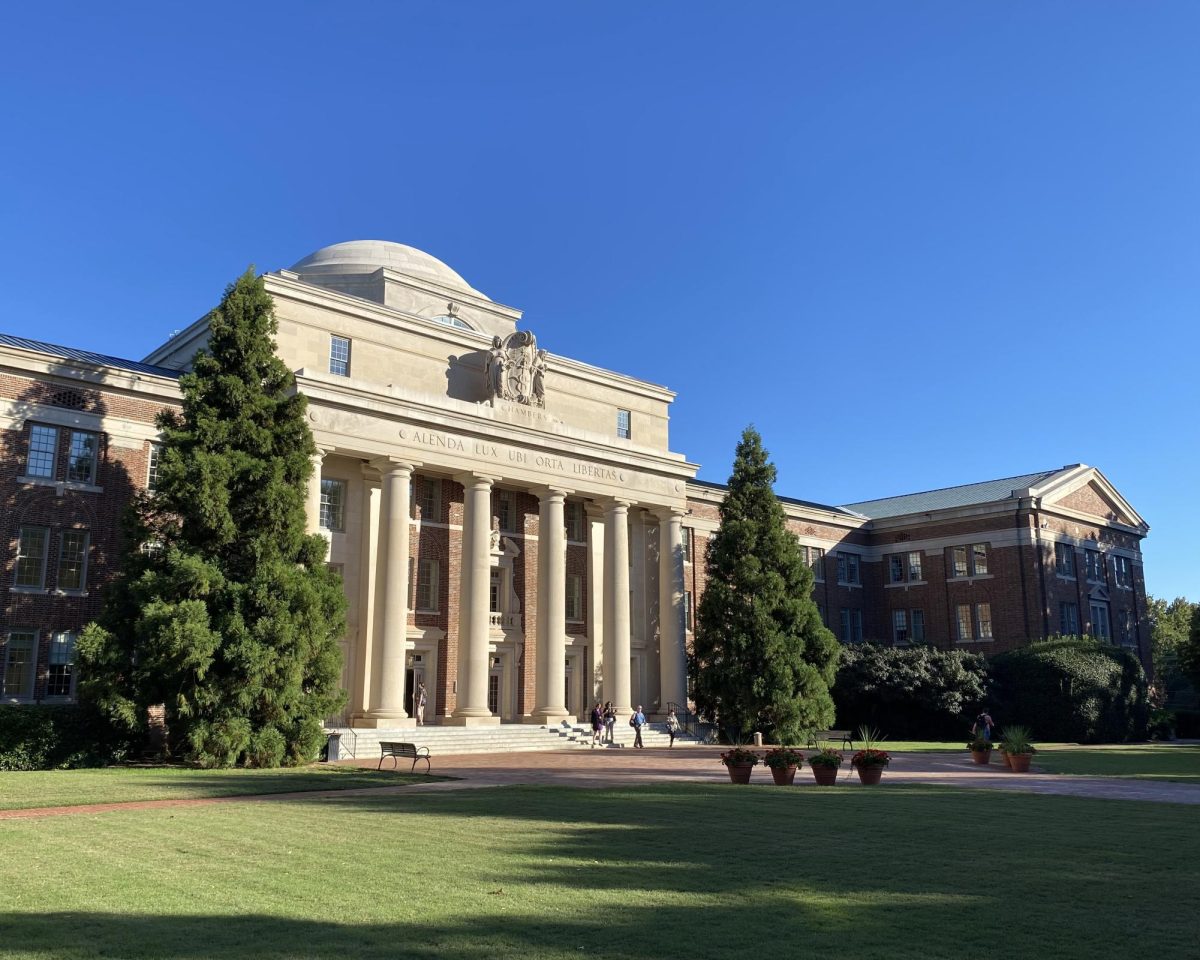




While most Davidson students have spent some time in Davidson’s Visual Arts Center either taking classes or enjoying the gallery exhibitions, its basement remains rather concealed, hiding an exciting art collection.
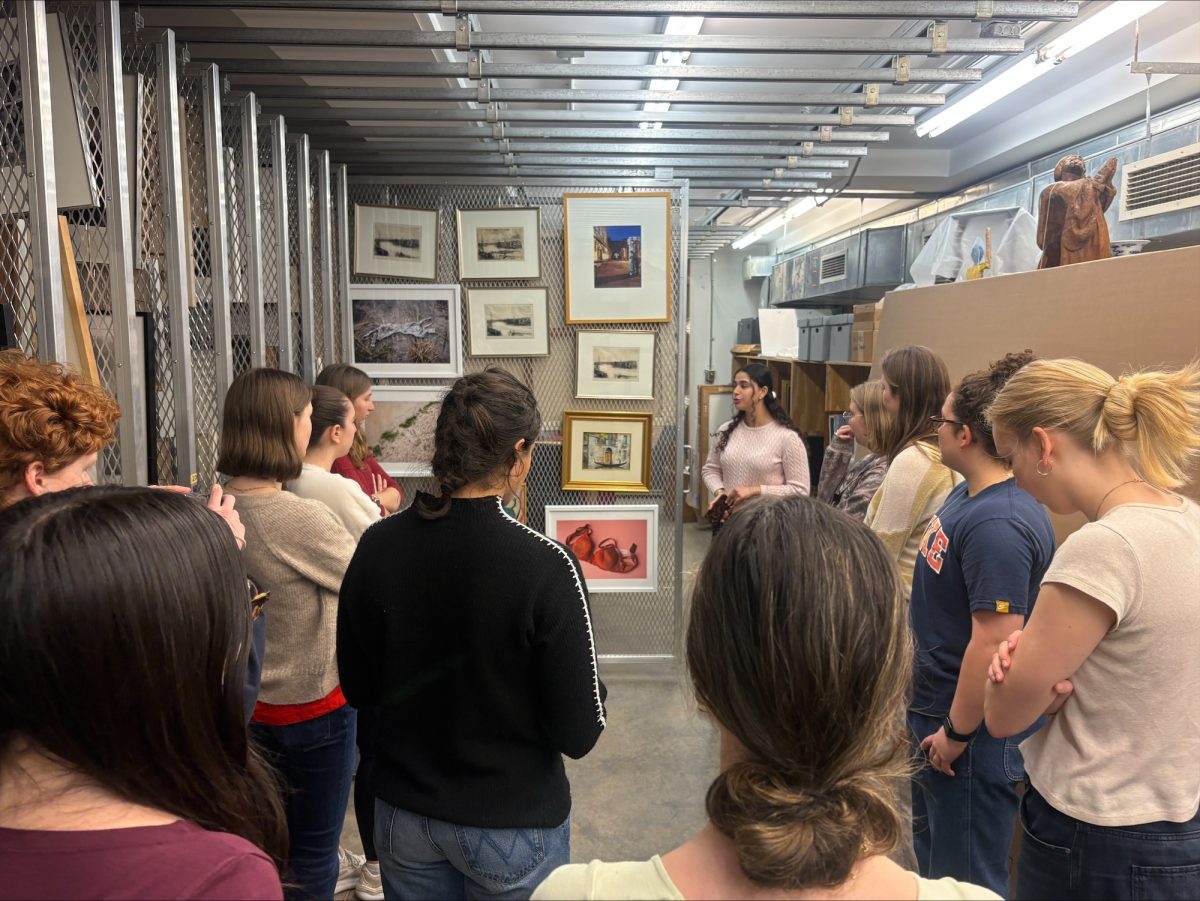
The VAC recently hosted “Arts + Apps: Hidden Gems in Art Collection,” an opportunity for students to hear five Gallery interns speak about their favorite works hidden to the public eye and housed in the basement’s collection storage.
This unique event—distinct from the VAC’s curated exhibits showcasing national and internationally acclaimed artists, senior capstone presentations, and academic workshops—showcased pieces spanning centuries, media formats, and artists. These make up just a few of the VAC’s 4200 works of art. Located in the basement, students got to see behind-the-scenes of the academic building, including the back room which houses rows and rows of art.
Heidi McGannon ’26, an Art History major, began the event by introducing the VAC and its events before deeming John Singer Sargent’s 1898 watercolor piece “Portrait of a Young Girl” her favorite in storage.
According to McGannon, while Sargent often painted individuals from high society who appeared older and proud, his more rudimentary depiction of a young girl struck McGannon.
“The sitter appears rather uncertain,” she said, “but sits with her feet crossed and hands in her lap,” indicating a degree of poise for her age.
The ambiguity of the subject also interests McGannon, with Sargent addressing the piece to a mysterious “Lucy.” Director & Curator of Art Gallery Lia Newman chimed in with her theory that it was a depiction of a girl named Lucille, who is mentioned in a book that she read about Sargent.
Afroditi Godi ’29, an intended Art History major, introduced her two favorite pieces. Elin O’Hara Slavick’s “A-Bombed Bottle” and “A-Bombed Comb” are the two only cyanotypes in the gallery.
Godi learned about this unique artistic technique during a high school summer program at Oxford, and has been fascinated since. One begins by putting two chemicals on a piece of paper with an object on top. The artist leaves it out to dry in the sun, and the exposed paper slowly becomes dark brown. However, the part that is covered by the object remains white.
The title of these pieces reference the 1945 atomic bombings of Hiroshima and Nagasaki, with the artist collecting objects from the Hiroshima Peace Memorial Museum to create these pieces.
Bella Rosenfeld ’27, also an Art History major, continued the presentation. She began by showing the audience the back of her selected piece, Romare Bearden’s “Evening 9:10PM, 461 Lennox Avenue,” displaying stickers of the different institutions in which the piece had previously been, including New York’s Museum of Modern Art.
Rosenfeld’s choice was created by one of her favorite artists and, to her, one of the most important visual artists of the 20th century. This 1964 collage reflects his experience as a Black man, depicting individuals in a confined personal space, with some sitting around the table and another on a boxboard bed to the right.
A larger scanned version is on display at the Guggenheim Museum, but Davidson houses the original. The piece depicts an important aspect of Black American life.
“Black life in America is not only one of protest and civil unrest. Harlem is not just about the artistic renaissance,” she said. “Their lives are also about being human and having a community and sitting down with people you love.”
Katie Davis ’29 then shared three photographs taken by Davidson alum and Grammy winner William Ferris ’64. Davis detailed her growing up in Brandon, Miss., where her family would share stories about life in the 1960s and 70s. The selected photographs were all taken in Mississippi, with one showing a predominantly Black church congregation in 1974.
Davis was especially interested in the depiction of 1970s fashion trends, and this rural, low-income community staying up to date with the bell-bottoms and patterned tops that made up the style of the time.
The second photo shows a watermelon vendor and his son beaming with pride while holding a large watermelon. Davis finds the son’s smile to indicate a sense of pride in this market, which does not generate much money yet brings such satisfaction to locals.
Sabrina Bonavita ’26, an Art History major, shared Henry Gasser’s 20th-century piece “Venetian Afternoon” as an emblem of the calm and slow Italian lifestyle. This realist watercolor depicts a gondola with a gondolier rowing two unknown individuals. “It brings me back to my time abroad where I studied Spanish realist artists,” Bonavita said.
Although the majority of the piece is the background and only some depicts the action, Bonavita finds this composition to assist in curating a peaceful, serene Italian day.
While these pieces may be hidden to the public eye right now, students can head over to the VAC to view the Gallery’s newest exhibit “Alternative Medicine: Healing Remedies for Harmful Times” which will be on display until April 13. Senior art majors will begin displaying their capstone exhibits on March 2.