








This semester, in my Decolonizing Development in Africa class, my professor paused during a discussion and offered a hypothetical: “Imagine someone said to you, ‘Oh, I just had a wonderful trip to North America and ate lots of good food.’”
Because what does that even mean? North America? Do you mean the United States? Canada? Mexico? The phrase feels broad and strangely unspecific. We rarely use it when talking about ourselves. We say “the U.S.” or simply “America,” as if that name belongs to us alone.
Then she asked us to consider the reverse. When someone says they visited Africa, how often do we immediately ask which country?
That question lingers because it reveals something deeper than semantics. The way we name places is not neutral. It reflects whose complexity we recognize and whose we collapse into shorthand.
I hadn’t thought much about that before she pointed it out. But once she did, I started noticing it everywhere, in headlines, in conversations and even in my own language.
Two weeks ago, when Bad Bunny performed at the Super Bowl halftime show, part of his message centered on unity across “America,” not just the United States, but North, Central and South America. In much of Latin America, “América” refers to the entire landmass. The United States is not the only country within it.
I was not used to hearing “America” mean so much more than just the United States. My professor’s question suddenly felt less hypothetical. Why does “North America” sound vague when applied to us, but “Africa” rarely feels incomplete? Why does one demand clarification while the other often passes without it?
In class, we talk about how much of what we now consider the dominant narrative about development and progress comes from the colonial era. European powers divided and labeled vast regions in ways that flattened complexity, and the frameworks they left behind continue to shape how development is defined, measured and reported.
Who sets the benchmarks, whose institutions are treated as universal, whose systems are considered the model? These questions are all deeply tied to colonial legacies. The more we unpack this framework, the more I realize that language operates in similar ways.
When a hurricane hits Florida, headlines name the state. When economic instability strikes a European country, the country is specified. But when conflict breaks out in one African nation, coverage often expands outward. “”Violence in Africa,” or “Crisis in Africa.” If we’re lucky, it might even include a subregion, like “West Africa” or “East Africa,” but more often, the continent is treated as a single entity. One country becomes representative of 55 countries (AU).
Over time, these patterns do more than simplify geography. They shape how we imagine complexity itself. The United States is detailed and individualized. Africa is often flattened. One is treated as distinct and internally varied; the other becomes shorthand. Sometimes this flattening happens without conscious reflection. At other times, it is deliberate. Either way, it reflects centuries of colonial influence.
The frameworks for development established during the colonial era were created according to European standards, and they still shape how entire regions are described and categorized today. Language does not simply carry those assumptions forward. It normalizes them. It makes certain hierarchies feel natural and certain omissions feel unremarkable. The flattening becomes so routine that we stop recognizing it as a distortion at all.
This is why the Super Bowl moment felt significant to me. When Bad Bunny held up the football he carried that said “Together, we are America” and had all of the different countries’ flags trailing behind him, the symbolism was unmistakable. In that image, he expanded “America” beyond U.S. borders, and uprooted a definition many of us rarely question. He reminded viewers that millions of people beyond the United States also identify as American in a continental sense.
The shift in my perspective has changed how I notice language and power. The way we name places and tell stories about regions is never neutral. These choices carry the weight of colonial histories, shaping which voices we hear and which we overlook.
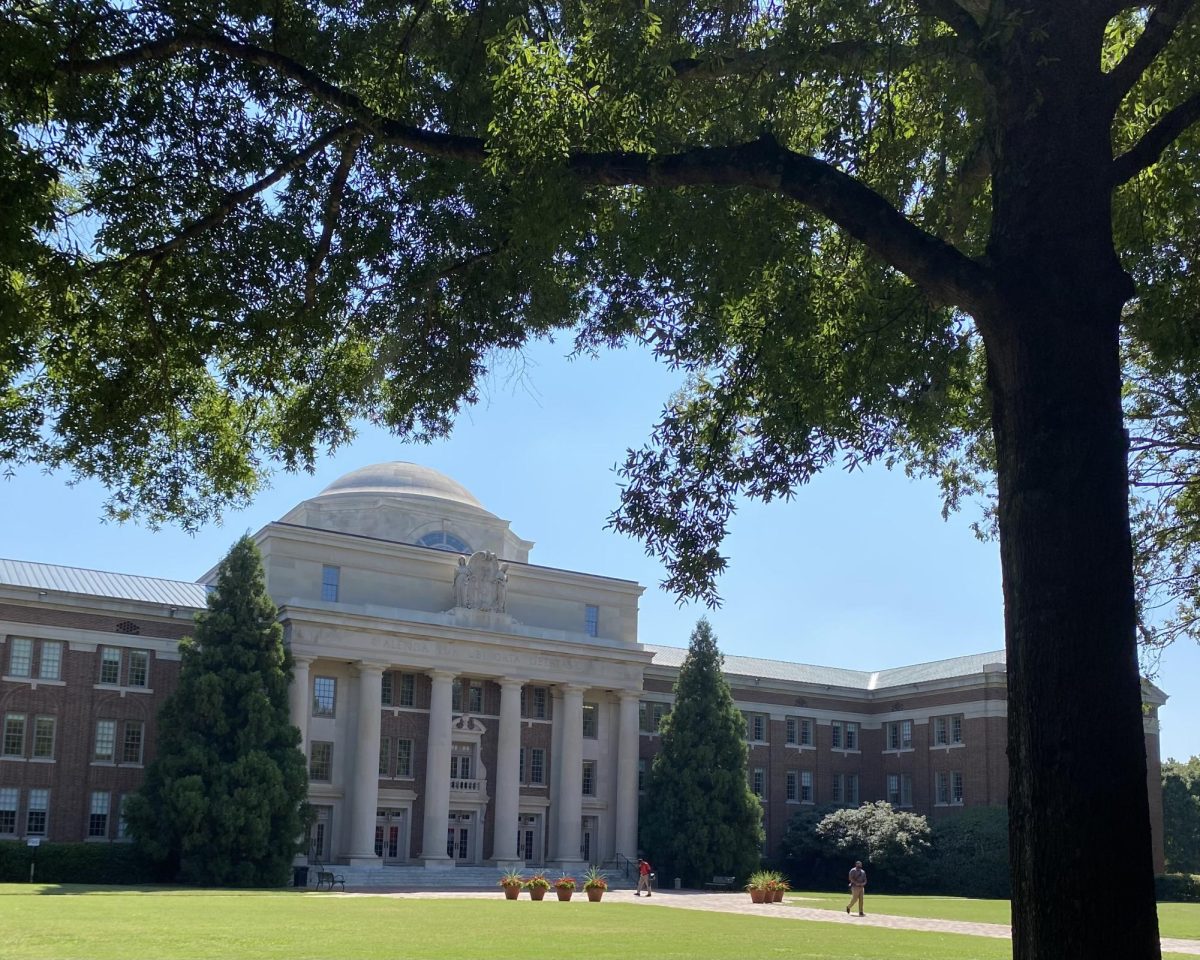
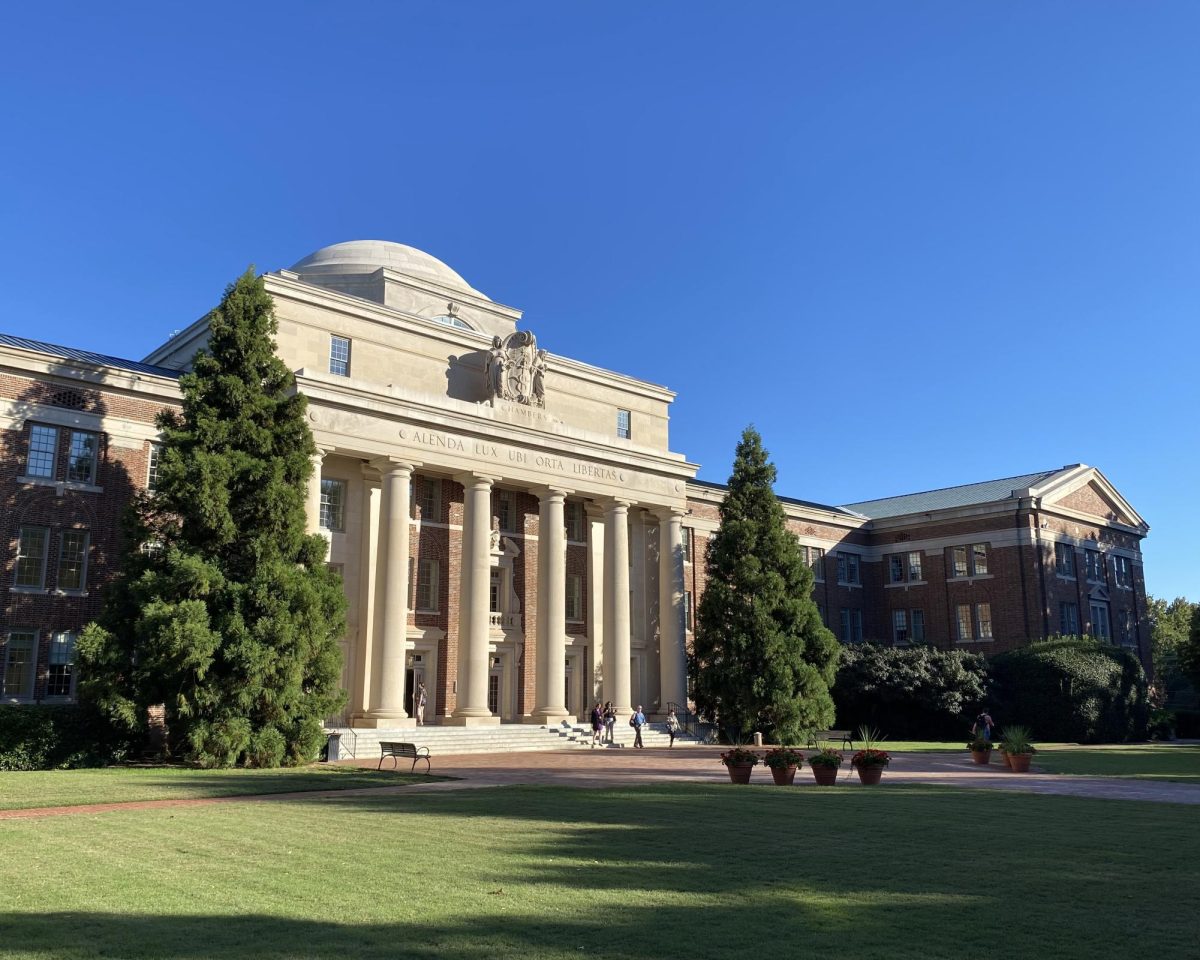
As Davidson publicly reckons with its own slaveholding past, that responsibility applies here as well. How the college describes its history, whose experiences are centered, and what it chooses to name all directly shape how that history is understood. If institutions are serious about confronting their past, they must also be serious about examining the language that frames it. Paying attention to language is one way to honor complexity and resist oversimplification.
The world is more layered than our shortcuts allow. Understanding it more fully begins with naming it more carefully.
CarlyAnn Underwood is a freshman from Raleigh, North Carolina. She is an undecided major. She can be reached for comment at [email protected].