


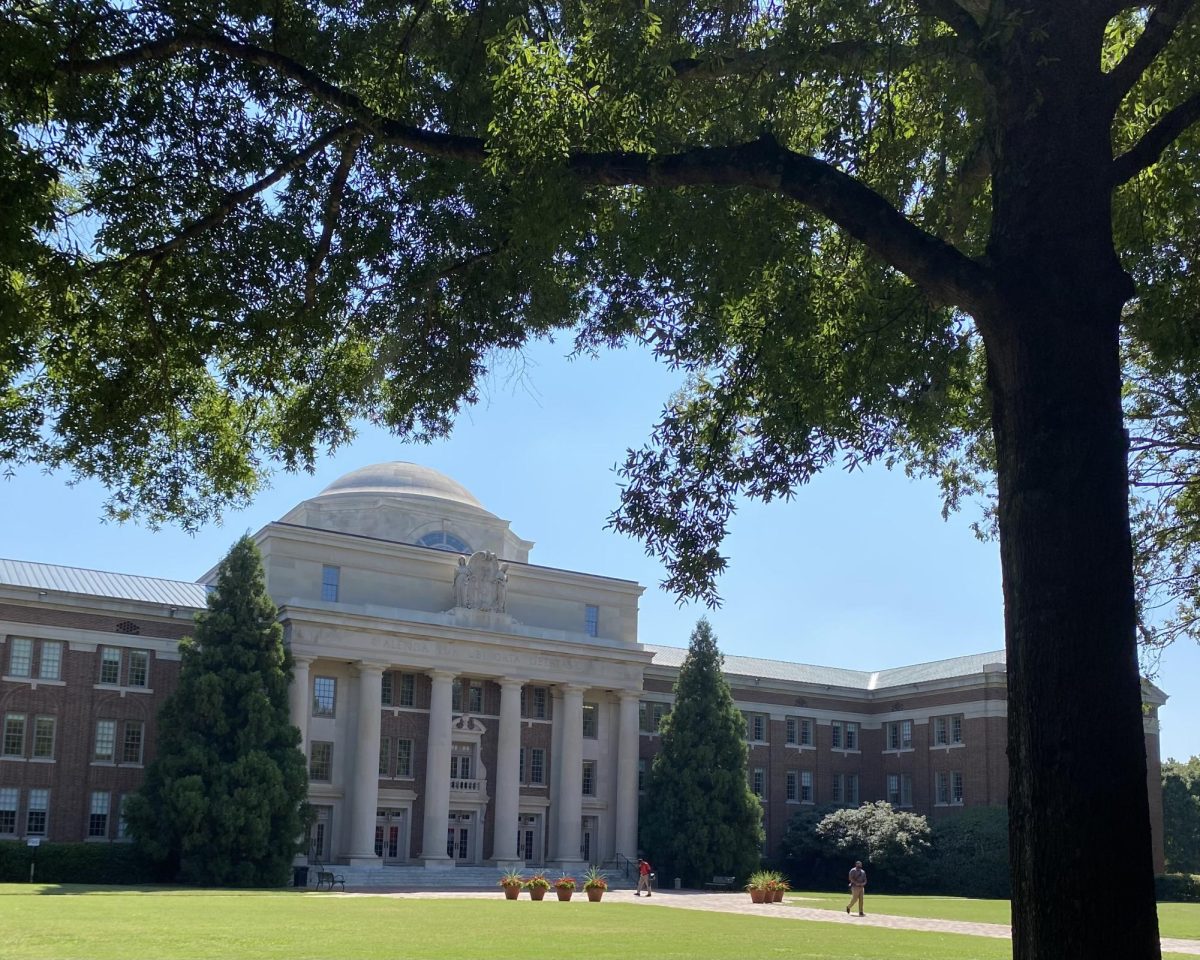
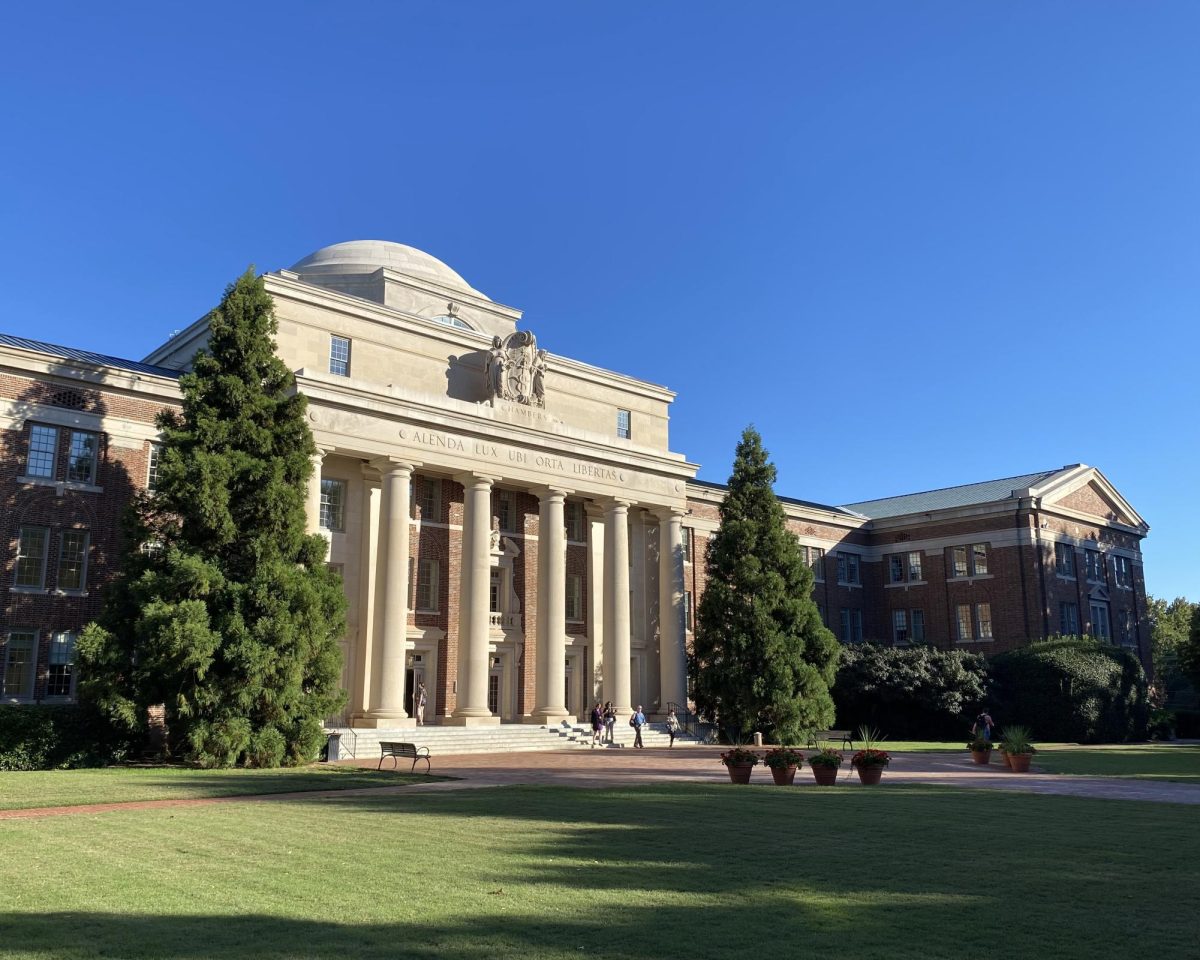







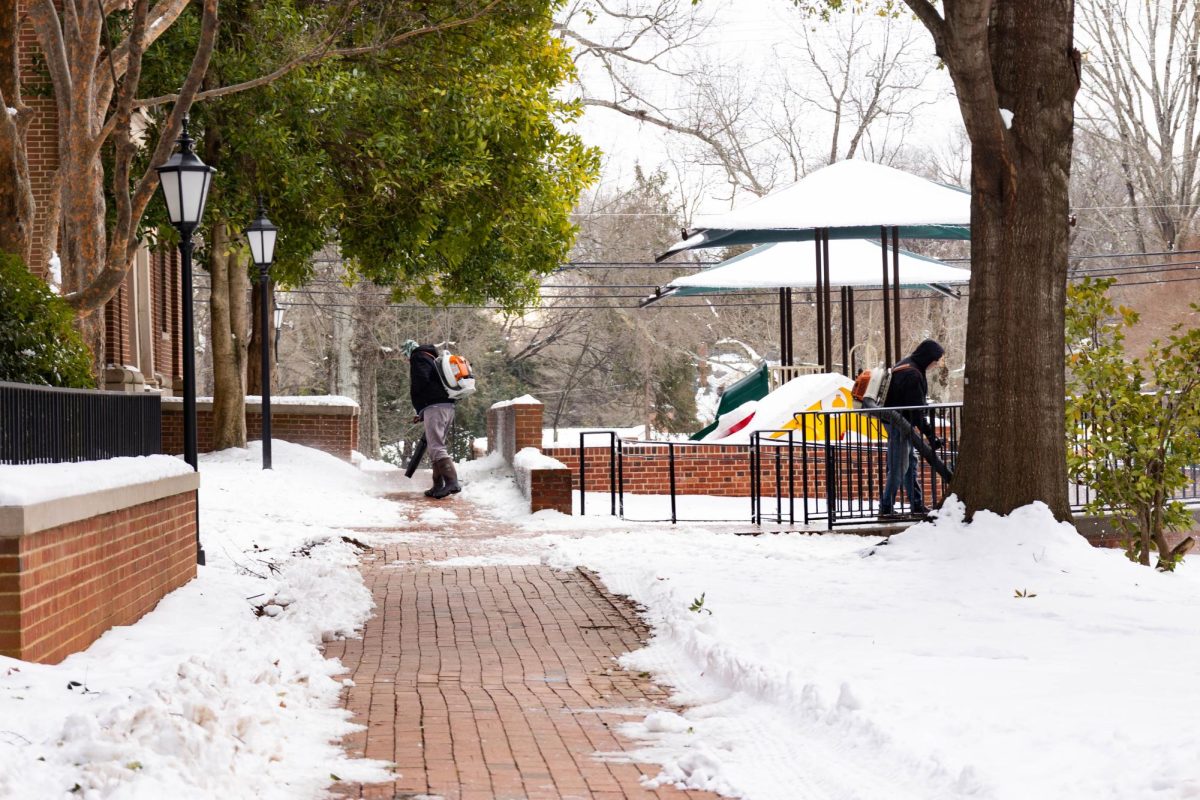
Davidson’s campus looked more like its northeastern counterparts than small town North Carolina in January when an ice storm hit just before the first full week of class. Eleven inches of snow fell the next weekend. While students sled down the old tennis courts and built snowmen outside of Chambers, dining services and physical plant staff braved freezing weather and spent nights away from their families to keep campus running.
Davidson considers dining services and physical plant staff, including building services, essential workers. They are required to come to work during periods of inclement weather or other emergency situations. The college needs them, Richard Terry, director of auxiliary services said, even when the roads are rough and the weather is “terrible.”
“Essential employees are basically people that if they’re not here, then you don’t eat, or we have three inches of ice on the sidewalks, or the power doesn’t get turned back on,” Terry said.
These employees put in hours of overtime over the course of the storms. Commons workers stayed through their morning shifts, which began at 6 am. Physical plant, typically only on campus during weekdays, worked 7 am to 4 pm through both weekends. Many employees stayed in rooms in the Homewood Suites in town or the Carnegie Guest House so that they could keep coming to work.
Terry, who lives three blocks from campus, walked to Commons the morning of Feb. 25, the first ice storm, expecting few workers in the kitchen.
“I’m imagining I’m going to open the door and there are going to be two people there sprinting around trying to prepare food. Instead, without fail, I go in that back door, and there are 15 to 20 employees busy getting things ready.”
Commons remained open at full service throughout both storms, minus one Monday morning when they opened two hours late, at 9 am. This decision was made, according to Terry, with worker safety in mind for those who were not staying nearby.
“We knew conditions would be treacherous, but driving in daylight versus driving at dark—on our regular schedule, we would have had cooks coming in and it would have been pitch black,” Terry said.
Many of these essential employees do not live in Davidson. Some live as far as Denver, on the other side of Lake Norman. Christopher Battle, the superintendent of building services, typically has an hour commute to work both ways. Following the ice storm, his drive took 2 hours.
“I took so many different alternate routes to avoid certain areas, to make sure I can make it to the highway,” Battle said.
He ended up spending three nights in the Homewood Suites with his family. Several of his other team members came by themselves. Several more, for those first few days, couldn’t make it at all. On Feb. 25, 11 workers in building services were able to come in, out of a staff of 48.
“It was kind of bad, it was bad.” Battle said.
Bad as it was, Battle pulled a team together. The fact that it was a Sunday provided some relief as they didn’t have to worry about cleaning any academic buildings. Still, building services is responsible for the cleanliness of residence halls and, critical during a snow storm, five feet outside of the halls. Battle and some of his team had to drive to Lowes to buy more shovels and ice melt. The grounds crew had that equipment, but they needed it to clear the rest of campus.
“Roads were definitely icy, but our main priority is serving the students,” Battle said.
The icy conditions proved challenging for on-campus work as well. Two people on Battle’s team slipped and fell while working outside. They went to the hospital and reported for work the following day.
“They came right back the next day with knee braces and shoulder braces on,” Battle said. “They [are] here to serve.”
Physical Plant Director David Holthouser put in 26 days of work as of Feb. 6, starting with move-in weekend when physical plant was on campus. The crew, who typically doesn’t work on weekends, remained on campus for the three weeks to follow.
“This group of people is unbelievably dedicated to show up for a snow event,” Holthouser said.
During weekend number one, the ice storm, 53 people showed up for work, just around half of his staff of 117. Weekend number two, the snow storm, that number rose to 60.
“A pretty good number, considering where a lot of my folks live,” Holthouser said. “Miles and miles away. My folks are essential employees, so it’s in their job description, yeah, when we call you need to be here,”
Decisions on what areas of campus to work on were made with students in mind. Because both storms hit on the weekend, physical plant dedicated their efforts to clearing paths from residence halls to dining resources like Commons and the Union.
“When we feel like we have won that battle, then we drop into library, fitness resources, and then we’ll go to academic buildings to be ready for the following day,” Holthouser said.
With the long hours spent in below-freezing temperatures, Holthouser prioritized keeping his team warm and their spirits up. The team cooked meals for each other and changed their socks often. Holthouser also cut their work off at 4 pm to get them on the road before sunset.
“I’ve got some stories some of my folks told when they came back in the next day about places that they struggled to get home,” Holthouser said. “One guy lives in Kannapolis, and there was a 100-car pile up on Interstate 85.”
As the snow melts and the weather returns to normal, leadership across dining services, building services and the rest of physical plant emphasized their teams’ commitment to the College and the work they put in to keep it safe.
“These are people with their own families, with their own house, with their own kids, with their own dogs, with their own livestock and in an event like this, they leave that to come here, and that’s a big deal,” Holthouser said. “Your husband, your wife, your partner might be at home, can’t get out of the driveway and you’re here.