


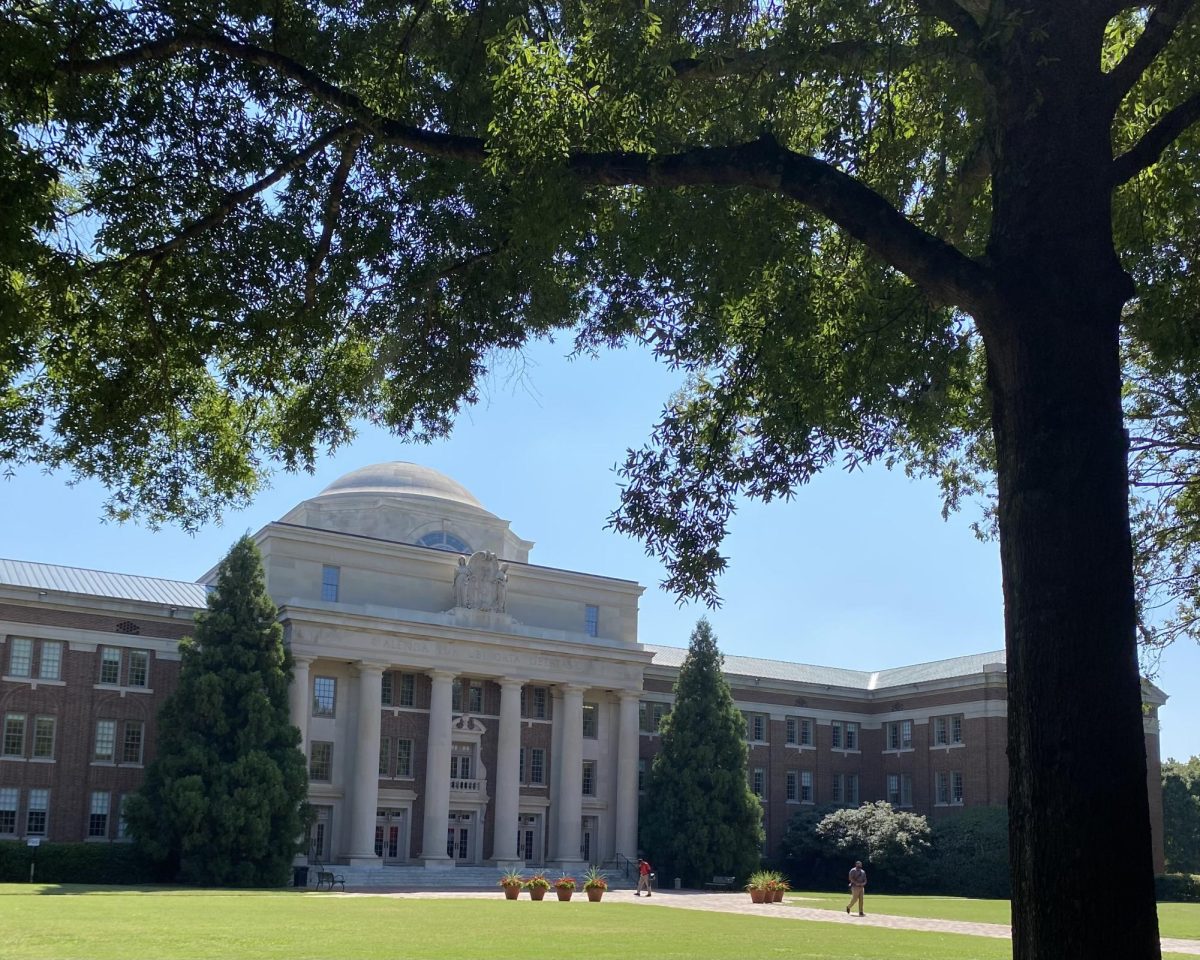
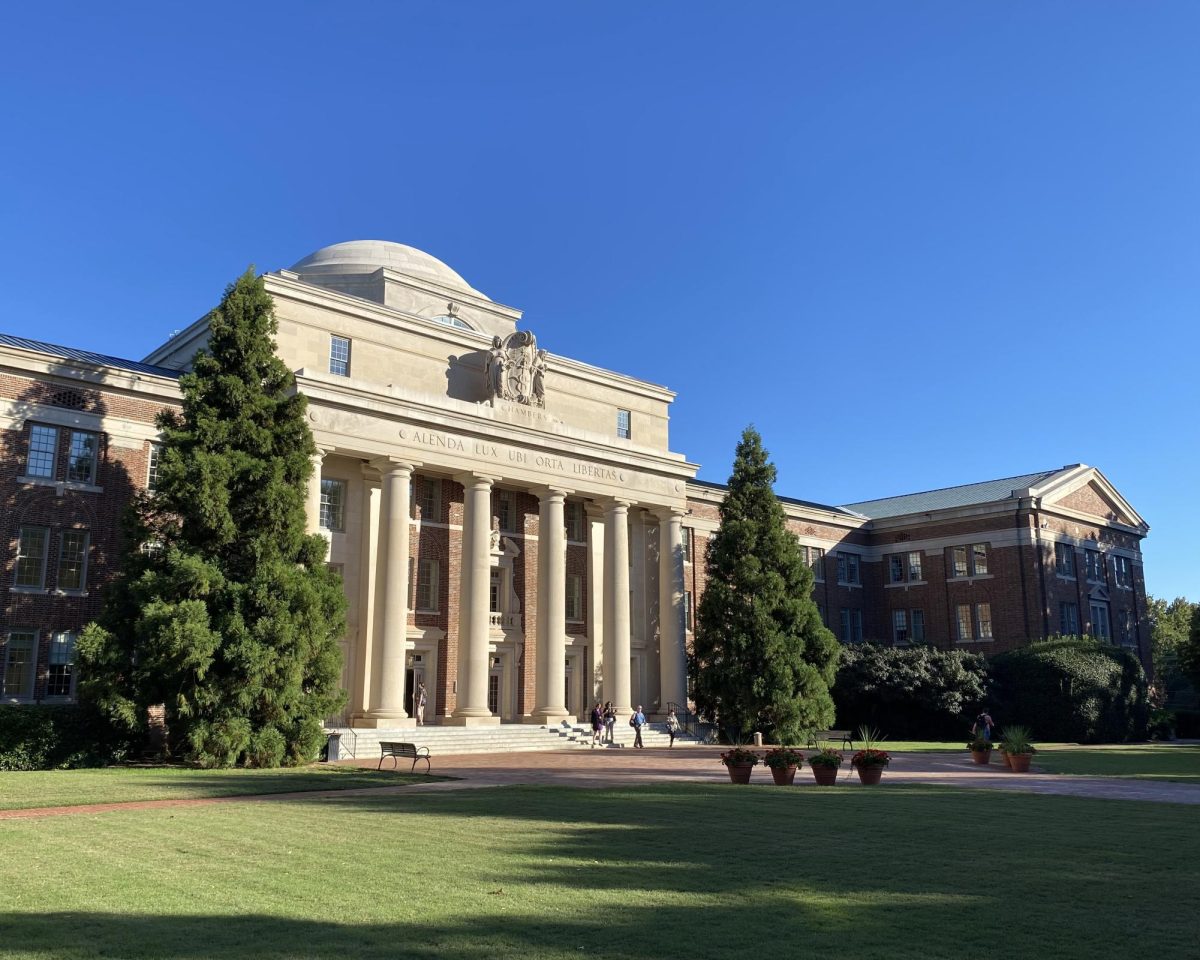


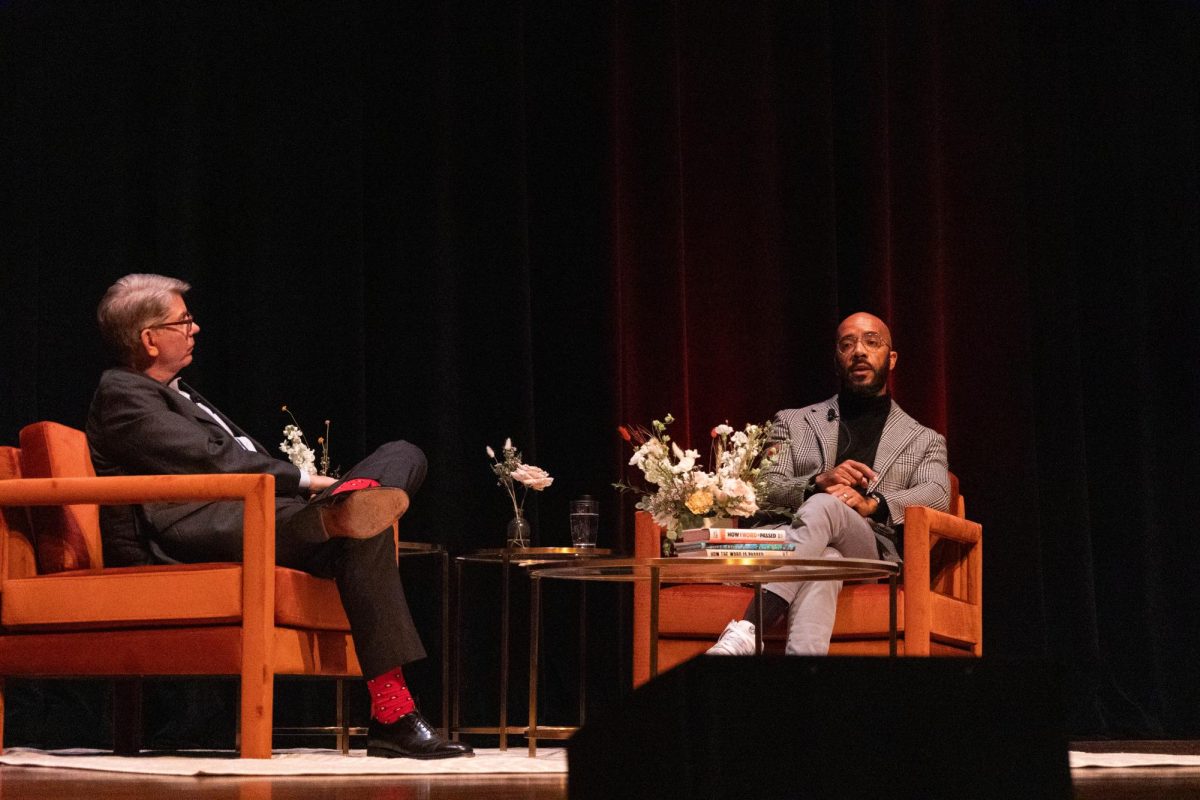
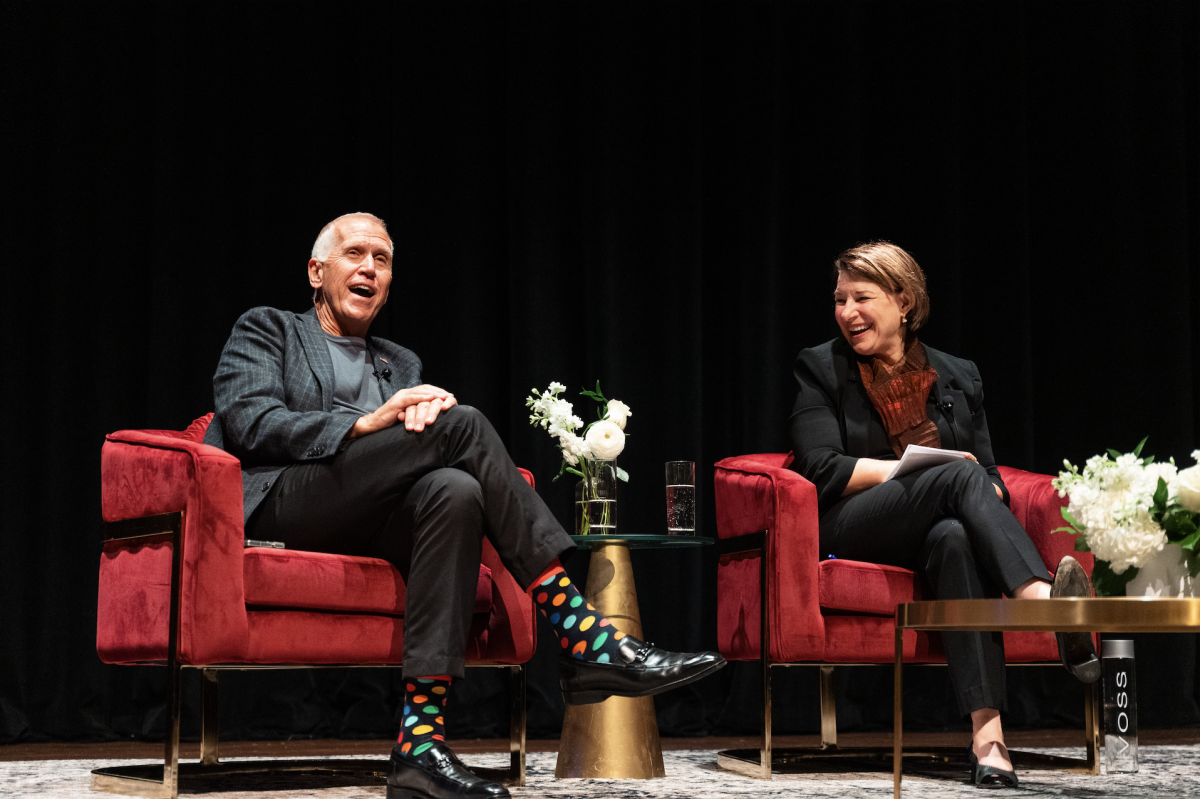


When Clint Smith ’10 delivered the Reynolds Lecture on Oct. 22, he articulated his belief in symbols like monuments and memorials—but, crucially, only when they serve as a call to action for tangible, material change.
Some in the Davidson community worry that the College’s memorial “With These Hands,” meant to symbolize and commemorate the enslaved and exploited people that built and have sustained the institution since its founding, will remain just that: a symbol unaccompanied by direct action.
Lennox Goslin ’28 said the acknowledgement will only stand true when tangible impact is evident. “I do appreciate the power the monument invokes, but I can’t give it my full support until I actually see the real change delivered in front of everybody’s eyes, until I see money being moved outside of the College and into the community,” Goslin said.
Community members have proposed multiple ideas including the creation of a descendant scholarship, providing infrastructure loans to rebuild parts of the increasingly-gentrified North Mecklenburg County, supporting healthcare needs of Jim Crow-era employees and funding after-school and college counselling services for children of descendants and residents of West Davidson.
Anaya Patel ’25 created the historical campus tour with Lauren Collver ’25 in 2023, with guidance from James B. Duke Professor of Africana Studies Hilary Green. Patel thinks that the memorial creates a false sense that exploitation and marginalization at the hands of the College has ended.
“I think that the emphasis on hands and the bricks displaces any present issues with racial violence and exploitation, and it sees slavery as something that is not present or […] that the roots of slavery don’t still exist,” Patel said.
Patel worries that a monument of such scale and financial investment placates demands and questions about resource allocation and wealth redistribution. “It makes it seem like Davidson is pouring all this money into everything that they can,” Patel said.
Goslin expressed a similar sentiment. “I feel like this is essentially an easy way out for them to create a monument and be able to point to it every time people tell them they’re not doing enough,” Goslin said.
Green’s archival work to recover the names and construct biographies of those commemorated by the monument has been central to the memorial’s construction. Green said Davidson is involved in community work behind the scenes, with the College supporting housing needs of West Davidson community members, but does not advertise it. Green expressed some frustration at what she described as a lack of transparency. “I know people would give their money to something like that if they know it’s a possibility,” Green said.
Goslin said the College has a responsibility to communicate its efforts to the wider community, emphasizing the specific significance to students. “[The student] experience is made slightly more hollow when you try to have justice and you are unaware of what is being done to achieve justice. Communication about that matters just as much as the work itself,” Goslin said.
Zarar Karim ’28 took Green’s “Campus Race and History” course as a freshman. He acknowledged the importance of a physical memorial. However, he said the College’s efforts must extend to community education. “It is unacceptable if you go through four years of Davidson and have no understanding of our history or of how we got here,” Karim said.
Learning about Davidson’s history is key to building the College’s future. Changes to College policy, including raising staff pay to the minimum living wage, are the result of student advocacy, Karim said. “In order to have that, we really need to address the large gaps in education that students come into Davidson with, especially about historical wrongdoings,” Karim continued.
Patel, Goslin and Karim all highlighted some of the important work campus and wider community members are engaged in, including the Summer Promise Program spearheaded by Rev. Daniel Heath, the historical campus tour, and Green’s archival work. Even so, they feel wider and more sustained engagement is lacking. “There’s stuff that’s happening, but that’s being done by a select few people, in a select few groups,” Patel said.
Green echoed this sentiment, too. “I can continue to do the historical part because that’s […] where my expertise is,” she said. “Those who are thinking about the bigger things need to start stepping up and really think about, ‘Well, what do we do now?’”
Green called on the Institute for Public Good to play a role in rethinking what it means to “do good” at Davidson. “How are they taking this history to develop a plan for the public good that doesn’t just support white Davidsonians, but actually includes all of [our descendant communities]?” Green said.
“I want it to be more than we did a report, we put up a monument, we put up a museum, and we have one or two dedicated professors, and we’re done, and I’m absolved from doing that work. I don’t want that to happen,” Green continued.
A common refrain across the memorial dedication and related lectures is that the sculpture is a conversation starter. Goslin said clarifying what that conversation entails—and who is involved—is a necessary step.
“When you just say something is ‘a conversation starter,’ you rob yourself of the need to actually secure a response,” Goslin said. “Who were you inviting? Who are we conversing with? […] The intentional lack of clarity in these bold, broad words is a little jarring to me, because how am I supposed to know where to point my energy to help,” Goslin said.
Patel emphasized that conversations about what can be done ought not be limited by what has been done. “I think what is required of us is to think more expansively about what institutions could do and should do that are outside the bounds of what they’re already doing.”