




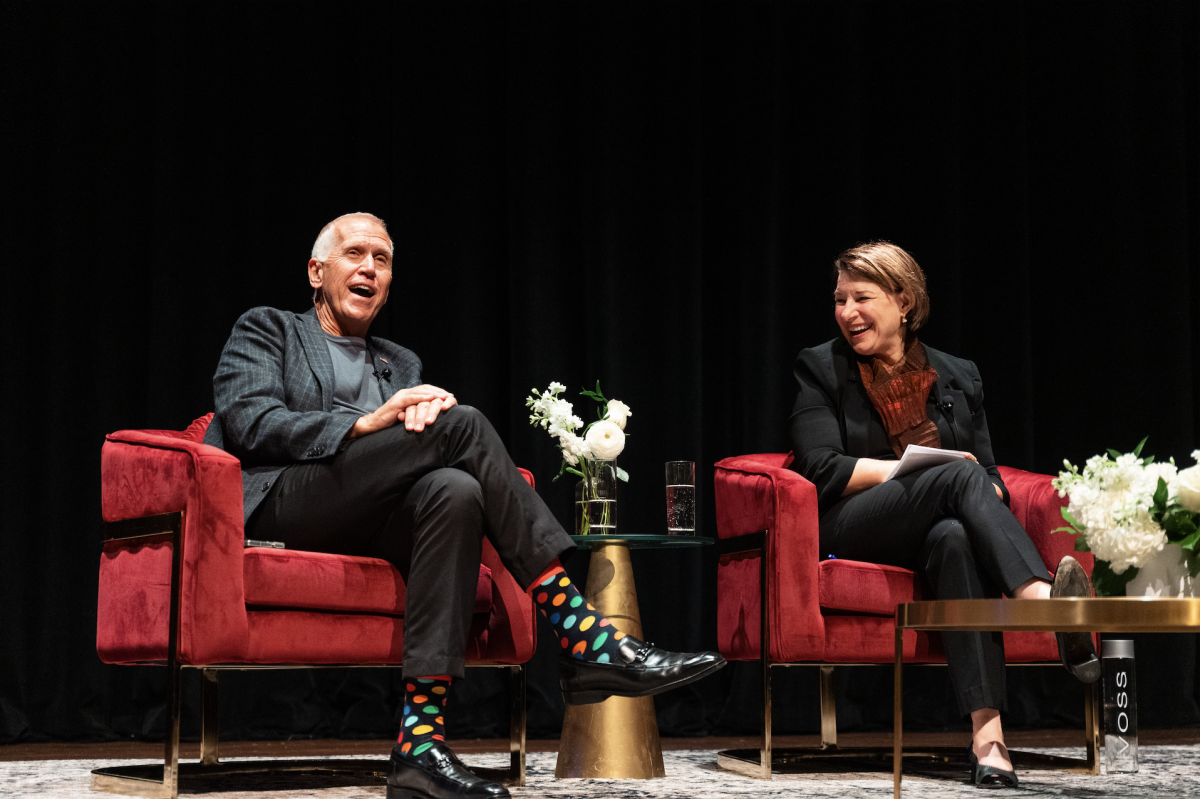


After Bob McKillop led Davidson to a 4-24 record in his first year as head men’s basketball coach in the 1989-90 season and won a combined 21 games over the next two seasons, he realized something had to change. Now, recently inducted into the Southern Conference and Davidson Athletics Halls of Fame, McKillop has earned recognition as one of the winningest coaches the game has ever seen.
Also nominated to the Naismith Basketball Hall of Fame, McKillop is the most successful coach in Davidson and league history. His 634 victories over 33 years at Davidson place him 54th on the NCAA Division I wins list. He also led the ’Cats to 23 conference championships and 10 NCAA tournament appearances.
McKillop never expected to be a coach. Like other young men from Queens, NY, he dreamt of playing center fielder for the Yankees, or point guard for the Knicks. After playing collegiately for East Carolina University and Hofstra University, McKillop momentarily signed with the Philadelphia 76ers in 1972. That 76ers team won nine games and cut McKillop in the same season. Now, he reminisces about that time with a frank humor.
“I was cut from the worst team in NBA history.”
The next year, he took a head coaching job at Holy Trinity High School in Chicago, where his teams won three state championships from 1973-1978. There, he realized the influence he had over his players.
“I could direct them, I could lead them, I could change them, I could impact them,” McKillop said. “I could point their life in a direction that I thought was the best way for them to move forward and mature.”
After working as an assistant coach for Davidson in 1978, McKillop returned to the high school level and took the helm at Long Island Lutheran from 1979-89, where he won five more championships.
When McKillop took the top job at Davidson in 1989, he expected to win. By the end of McKillop’s third season at Davidson, however, his aspirations looked unrealistic.
Davidson had fallen in the Big South quarterfinals after a middling 11-17 record. The ’Cats were slated to join the Southern Conference the next season, which meant tougher competition.
Following the loss, McKillop went to scout a player from France playing in a nearby tournament. When he entered the gym, he spoke with a junior college coach he recognized.
“[The coach] says, ‘You lost to Campbell, and you’re going to go into the Southern Conference? You’re going to have it really hard.’ That resonated in my mind,” McKillop said.
Driving back from that game in the pouring rain, McKillop learned the hardest lesson of his coaching career: coming to terms with failure.
“It’s always difficult to be introspective, and I have never had fear about that, but it wasn’t only affecting my life, it was affecting my family’s life,” McKillop said. “They could face the possibility of being uprooted from here if I get fired the next season.”
Then and now, McKillop recognized the damage that “a scarlet letter of F” can wreak on a coach’s reputation.
“It’s a public shaming, and it’s a public shaming that not only affects [a coach], but it affects his family,” McKillop explained. “It’s sort of like the politician that gets defeated in an election. You never get over that.”
A few weeks after that drive in the rain, McKillop and his family were vacationing in Myrtle Beach, SC. There, McKillop read a book called The Fighting Spirit: A Championship Season at Notre Dame by legendary Notre Dame head football coach Lou Holtz. In that book, McKillop found the scaffolding that supported his program for the next thirty years.
“In an opening meeting with the team that year, Holtz […] said, ‘We are going to be champions in football this year if you can be trusted to do your best, if you can be committed to doing your best, and if you care about each other and you show it,’” McKillop explained.
Those three words—trust, commitment and care—resonated with McKillop. “From 1992 to the day I left in 2022, it became the cornerstone foundation, the building block upon which everything happened here at Davidson basketball,” he said.
McKillop committed himself to modeling that foundation in every facet of his life, and to fighting “those daily battles of trying to be better at trust, commitment and care.”
Director of Athletics Chris Clunie ’06 said McKillop’s example made his players better people. Reflecting on his favorite “McKillopisms” like “pay me now or pay me later,” “discipline comes before freedom” and “sloppiness is a disease,” Clunie explained that they all apply to life beyond the court.
“He’s just really good at drawing those parallels,” Clunie said. “You became a better basketball player, but you also became a better person.”
In retrospect, McKillop is hesitant to pinpoint a defining moment when the program he had been building clicked into place. However, he did recall one contender.
During the closing stretch of the 1992-93 season, the ‘Cats were on a two game road trip before the SoCon tournament. They were set to face an immensely talented Marshall University team before squaring up against a gritty squad from the Virginia Military Institute.
Davidson was 11-13 heading into that weekend, staring down an 11–15 record. When McKillop remembers those games, he thinks of his daughter, Kerrin McKillop ’02, who was twelve at the time.
“Kerrin came with us on the trip, and she was with me the whole time,” McKillop said. “Maybe she was an inspiration, or maybe just a guardian angel for me.” Davidson went on to beat Marshall and VMI that weekend.
In the span of a weekend, the ’Cats picked up two more wins. Now 13-13, faced Marshall again in the first round of the SoCon tournament—and won.
Davidson’s 14-14 record that year was the last time McKillop had a record of .500 or worse.
“That was kind of a defining moment for us,” McKillop said.
It is not surprising that McKillop’s memories of on-court success are anchored by family connections. Family was the foundation, even before trust, commitment and care came along.
Without the family decision he and his wife Kathy made to move to Davidson in 1989, McKillop’s success “doesn’t happen.”
“She was the one who made the incredible sacrifices, because I was occupied with coaching,” McKillop said. “I was occupied with building a program.”
The commitments went beyond his own family. McKillop is profoundly grateful for the assistant coaches and their families who bought into the program.
“When they join a program, they’re committing their family to it,” McKillop said. “I have always treasured the assistant coaches who have brought their families into an entirely new environment, a challenging environment, and rolled their sleeves up and tied their sneakers tighter to commit themselves to Davidson College, to the basketball program.”
McKillop credits all his players for showing the same commitment his staff showed.
“The players came here, yeah, because of the [basketball] program, but they came here because they wanted to be challenged by what goes on on this campus, the academic rigor of this campus, the accountability that they’re going to be held to on this campus as true student athletes,” McKillop said.
McKillop attributes his success to this collective of players, coaches and families. As he puts it, he was never “setting an Olympic record in the 100-yard or 100-meter sprint individually. Teamwork was part of that experience.”