










Rumors that Davidson was in the early stages of a C. diff outbreak spread as fast as the alleged case count early this week, prompted largely by speculation and disinformation on the anonymous social media platform Yik Yak. According to the Center for Student Health & Well-Being, only one student has tested positive.
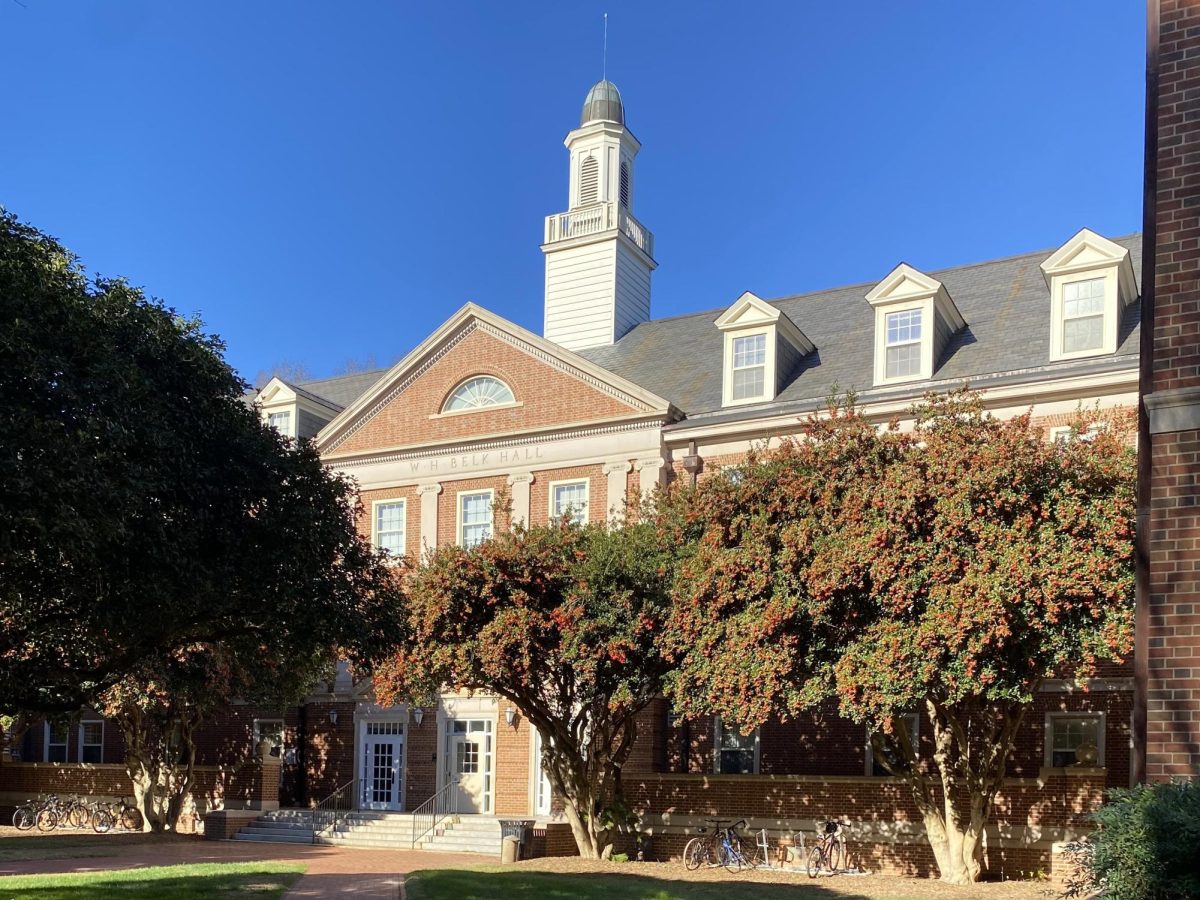
Speculation started Monday morning after Belk Hall residents received an email from Associate Director for Residence Life Ivy Barefoot which contained a letter written by the CSH. They had “been notified of students who have been diagnosed with a stomach bug that can be very contagious.” The letter urged students to look out for symptoms—watery diarrhea, abdominal pain or blood in stool—and take preventative measures including thorough hand-washing and disinfecting surfaces with bleach. The email recommended symptomatic students get tested for “C-Diff, stool cultures, White Blood cells and Ova & Parasites.” Some students interpreted the suggestion to test for C. diff as evidence that multiple students were sick.
C. diff (Clostridioides difficile) is a highly contagious bacterium that causes diarrhea and colitis and is notoriously hard to kill. Often caused by antibiotic medicine use, C. diff infections (CDI) kill almost 30,000 Americans every year—primarily people over 65. Over one in six people who contract CDI will get it again within 2-8 weeks. For some, it can cause irreparable harm.
Almost immediately, someone posted a screenshot of Barefoot’s email to the anonymous social media platform Yik Yak which students frequently use to crowdsource information about campus happenings. Posts about CDI garnered hundreds of likes over Monday and Tuesday. A few claimed to come from students who had just tested positive and wanted to inform their peers about which bathrooms they had recently used. Some joked about catching the “Belk Bellyache” or cancelling finals.
I redownloaded Yik Yak around noon on Tuesday soon after hearing about the alleged outbreak. Based on the posts I read, I assessed that at least five students had confirmed or suspected CDI—and that it was spreading fast. As soon as I got out of class, I walked to CVS, purchased the most credible disinfectant I could find, and went to town cleaning the bathroom in my suite.
That afternoon, according to posts on Yik Yak, students who reached out to the Center for Student Health & Well-Being learned that only one student has a confirmed case of CDI. Associate Director Kathy Carstens confirmed the same Wednesday afternoon in an email to The Davidsonian.
“There is one confirmed case [of CDI], and all appropriate medical and environmental steps were taken for that student and their living space,” Carstens wrote.
“Because this was a single, isolated case with proper mitigation, there is no indication of broader risk to the community and no need for a campus-wide announcement at this time,” Carstens continued.
CDI is not the only stomach bug going around. “The communication sent to residents of Belk referenced a “stomach bug” of which we have seen several for differing reasons,” Carstens clarified in a follow-up email.
What dozens of students believed to be the early stages of a public health predicament was actually disinformation. The victims? Immunocompromised students for whom contracting CDI could be life-threatening.
“I’m literally terrified of this c diff outbreak,” one student wrote on Yik Yak. “My mom is immunocompromised I’m afraid I’m going to get it and not be able to go home,” wrote another.
I ruminated about what would happen if I got sick. How would I take my exam-center finals? Would I feel well enough to study? When could I go home? What if I got my family sick? In other words, I took the threat of a serious infection, well, seriously.
Carstens’ email caught me off guard. For a while, I believed what I was reading on Yik Yak; I had no reason not to. Even when posts turned bizarre, I just assumed a few bad actors had started to make jokes about the situation. I was more inclined to believe that the College was withholding information than that my peers were lying. Truthfully, I never considered that most students posting about getting CDI were spreading disinformation. Though to be fair, I also have no way of knowing whether the posts came from separate people in the first place.
Two students lambasted people spreading lies about the situation on Yik Yak.
“I thought Davidson is all about the honor code. Why are people lying about the bathrooms they’ve used? […] F— you guys for stressing me out during finals,” one user wrote.
“I’m so disappointed in the people spreading lies on yik yak. I’m just trying to study but have been stressing out about catching C. diff. Do better Davidson students,” wrote another.
The response? It’s “never that deep,” and “chill, can’t take a joke?”
I am relieved to learn Davidson is not in the early stages of a public health crisis. But I am deeply saddened that members of our community think spreading plausible disinformation is funny. I am disgusted that Davidson students would take advantage of the culture of trust engendered by our Honor Code—which this week’s events violated to an egregious extent—to deliberately promote false information about a serious threat to student health.
Yik Yak can be a valuable tool for crowdsourcing information, especially in the absence of official communication from administrators. But it can also be easily abused by bad actors, including those just looking for a laugh. This week’s public health scare needs to spark an honest conversation about whether that trade-off is worth the cost.
Lew Powell • Dec 15, 2025 at 8:10 am
Well reported and thought out — thanks!